Building a High-Conversion WhatsApp Contact Database: A Practical Guide to Hygiene and Segmentation
Learn how to build a high-conversion WhatsApp contact database using continuous list hygiene, platform-specific signals, and strategic segmentation.
A high-conversion WhatsApp contact database relies on data accuracy and strategic segmentation rather than raw contact volume. By standardizing contact formats and utilizing platform-specific registration and activity signals, organizations can filter out inactive numbers, prioritize high-value segments, and maintain a clean, actionable database. This continuous process of WhatsApp contact list hygiene supports compliant, relevant messaging workflows and helps teams optimize their outreach resources effectively.
The Shift from Volume to Value
Many organizations initially focus on accumulating as many phone numbers as possible, assuming that a larger database naturally yields higher engagement. However, raw contact volume often leads to wasted messaging spend and diluted campaign performance. Database quality is defined by data accuracy and segmentation rather than total contact volume. When teams send messages to unverified lists, they risk directing resources toward numbers that are no longer active or were never registered on the target platform. Shifting the focus from quantity to quality requires a systematic, data-driven approach to contact management. A high-quality WhatsApp database requires continuous validation and categorization. By prioritizing actionable database quality, organizations can support outreach efforts directed at valid accounts. This approach helps teams review their existing CRM data, identify gaps in contact accuracy, and establish a foundation for more effective communication strategies.
Foundations: Data Standardization and Hygiene
Building a reliable contact database begins with rigorous data standardization. Standardizing data formats is a prerequisite for effective validation and list cleaning. Contact lists often originate from multiple sources, such as web forms, CRM imports, and offline data entry, leading to inconsistent formatting. Before any platform-specific checks can occur, teams must normalize these numbers into a consistent structure. Once the data is standardized, organizations can implement bulk checking workflows. NumberChecker.AI supports bulk workflows through CSV or TXT list uploads and REST API access, helping teams process large datasets efficiently. However, list hygiene is a continuous process, not a one-time event. Because phone numbers frequently change ownership and users regularly update their messaging platform preferences, a database that is accurate today may degrade over time. Implementing an ongoing WhatsApp contact list hygiene routine helps organizations maintain data accuracy, supports routine CRM audits, and informs internal decisions regarding data retention and outreach planning.
Leveraging Platform-Specific Signals
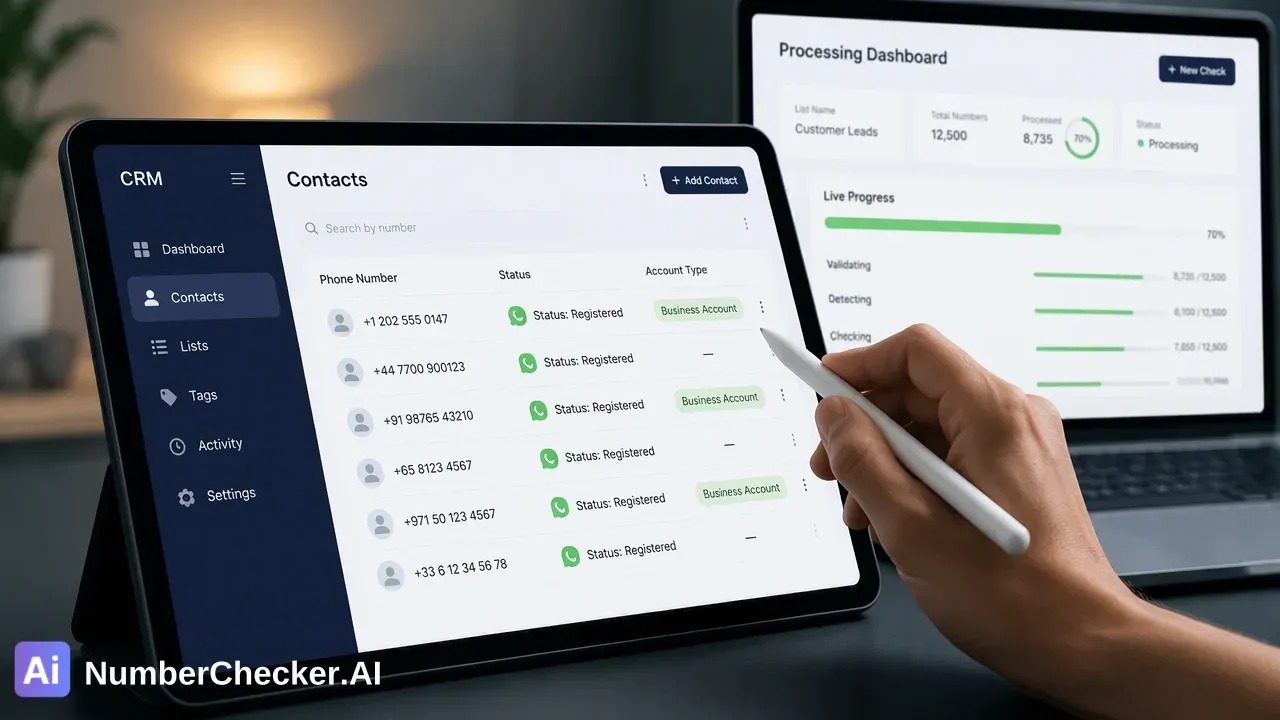
General phone number validation can confirm whether a number is formatted correctly, but it does not indicate whether that number is associated with an active messaging account. To optimize outreach, teams need platform-specific context. The WhatsApp Days Checker provides platform-registration, activity, and business-profile signals to inform outreach planning. A platform-registration signal is a technical indicator confirming that a specific phone number is associated with an active account on a given messaging platform at the time of the check. In addition to registration status, the WhatsApp Days Checker provides available activity or last-seen context, plus available business-account and profile context. These activity and profile signals help prioritize outreach by giving teams a clearer picture of account presence. By integrating these signals into their workflows, organizations can filter out numbers without an active platform presence, thereby supporting more efficient decision-making for CRM workflows and resource allocation.
Strategic Segmentation for Better Conversion
Once a database is cleaned and enriched with platform-specific signals, organizations can transition from broad broadcasting to targeted communication. Segmentation improves outreach relevance by grouping contacts based on verified attributes rather than assumptions. Using the business-profile signals and activity context provided by the WhatsApp Days Checker, teams can categorize their audience more effectively. For example, segmenting audiences based on business-profile signals helps tailor messaging for specific support or sales workflows. If a number is identified as a business account, an organization might route that contact to a B2B sales sequence rather than a consumer marketing campaign. Tagging contacts based on profile context supports tailored messaging and helps teams prioritize high-value segments. This strategic categorization helps keep outreach highly relevant to the recipient’s account type and activity status. By continuously applying these segmentation practices alongside routine list hygiene, organizations can maintain a highly actionable database that supports sustained engagement and informs long-term communication strategies.
Frequently Asked Questions (FAQ)
Why is raw contact volume a poor metric for messaging success?
Relying solely on raw contact volume often leads to wasted messaging spend and inefficient resource allocation. A large database inevitably contains outdated, incorrectly formatted, or inactive numbers. When organizations prioritize quantity over quality, they risk directing outreach efforts toward numbers that cannot receive messages on the intended platform. Database quality is defined by data accuracy and segmentation, which provide a much more reliable foundation for planning and executing effective communication workflows.
How does platform-specific verification differ from general phone validation?
General phone validation typically confirms whether a number is formatted correctly or follows standard numbering plans. In contrast, platform-specific verification checks for account-related presence on a specific service. For example, a platform-registration signal confirms that a specific phone number is associated with an active account on a given messaging platform at the time of the check. This provides essential context for prioritizing outreach, as a correctly formatted phone number does not automatically mean the user is registered on the target messaging app.
What is the role of continuous list maintenance in CRM health?
List hygiene is the ongoing process of validating, cleaning, and updating contact data to maintain accuracy and relevance. Because phone numbers change hands and users frequently modify their platform registrations, a static database quickly degrades. Continuous list maintenance helps organizations identify inactive accounts, update formatting inconsistencies, and maintain an accurate view of their audience. This ongoing process supports routine CRM audits and informs internal decisions regarding data retention and outreach prioritization.
How can profile signals improve the relevance of marketing or support outreach?
Profile signals, such as available business-account context provided by the WhatsApp Days Checker, give teams additional data points for categorizing their contacts. By segmenting audiences based on these business-profile signals, organizations can tailor their messaging for specific support or sales workflows. Tagging contacts based on profile context helps teams route communications appropriately, helping B2B contacts receive relevant business information while consumer accounts receive appropriate marketing material. This targeted approach supports more effective and relevant outreach campaigns.
Get Started with NumberChecker.AI
Explore NumberChecker.AI’s supported bulk list-checking products and choose the capability that fits your workflow.
Ready to get started?
Try our WhatsApp number validation service and see the difference clean data makes.

