Optimizing SMS Marketing Campaigns Through Bulk Number Verification
Learn how to verify numbers before SMS campaign deployments using bulk checking workflows, carrier intelligence, and platform registration signals.
Verifying numbers before an SMS campaign helps teams segment audiences based on specific data signals, such as carrier line types or platform registration status. By using bulk checking workflows, organizations can improve list hygiene, account for regional context, and plan rich-messaging strategies effectively. This process helps marketing and technical operations teams avoid obvious waste and refine their targeting before deploying large-scale communications.
The Role of Data Hygiene in SMS Marketing
Managing large contact lists requires a systematic approach to data quality. Bulk checking serves as a foundational step for organizations preparing to launch large-scale communications. Instead of treating every contact as identical, teams can analyze large datasets of phone numbers to identify specific attributes before initiating outreach. This workflow supports audience segmentation and campaign planning by providing documented status fields for each record. By integrating bulk list checking into the preparation phase, marketing operations can filter out incompatible numbers, such as inactive formats or unsupported line types, and focus resources on segments that align with the campaign’s technical requirements. This proactive data hygiene helps teams avoid obvious waste and supports routing decisions based on current, documented number attributes rather than assumptions.
Segmenting Audiences with Carrier Intelligence
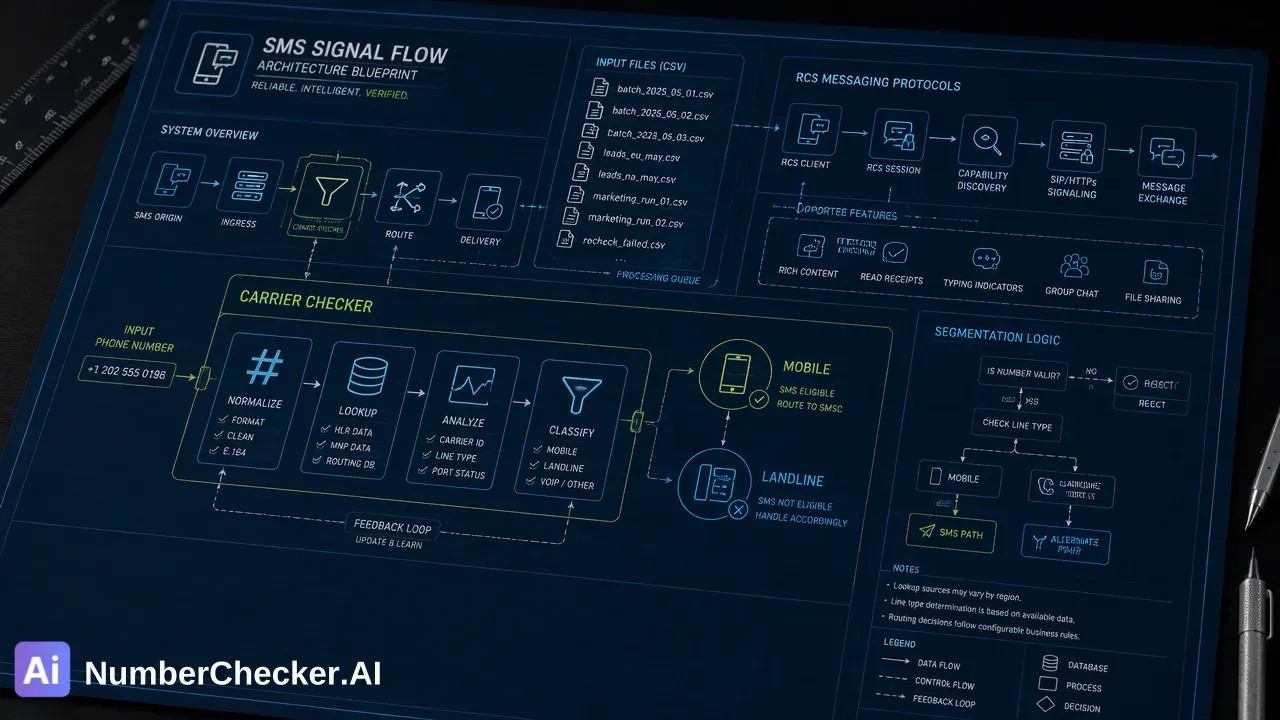
Different regions and network operators handle messaging traffic according to distinct technical frameworks. The Global Carrier Checker provides carrier intelligence that helps teams understand the underlying infrastructure of their contact lists. This capability identifies the carrier, line type, country, and regional context for phone numbers across supported countries. Understanding this carrier context helps teams tailor their approach to different regional markets. For example, identifying whether a number is associated with a mobile line, a landline, or a fixed VoIP service informs how a campaign should be routed. Landlines typically cannot receive standard SMS messages, so identifying these line types helps teams exclude them from mobile-focused broadcasts. By applying location signals and line-type data, organizations can structure their audience segments to match the specific routing requirements of their target markets, helping direct campaigns only toward compatible infrastructure.
Planning for Rich Messaging with Platform Signals
Modern campaigns often incorporate advanced formats that require specific device or application support. The RCS Checker identifies phone numbers that support RCS or Google Messages. This platform registration signal confirms account-related presence on the RCS network at the time of the check. These signals support audience planning for rich-messaging campaigns. Because not all mobile devices or networks support RCS, attempting to send rich media to incompatible numbers results in fallback behavior or failed rendering. By verifying platform registration status beforehand, campaign strategists can segment their lists into standard SMS recipients and rich-messaging recipients. This distinction helps teams deploy interactive content—such as high-resolution images or suggested reply buttons—only to numbers documented as having the necessary platform support. This targeted approach optimizes the overall campaign strategy by aligning the message format with the recipient’s documented platform capabilities.
Implementing Bulk Verification Workflows
Integrating these checks into existing marketing operations requires efficient data handling. NumberChecker.AI supports bulk workflows designed for large datasets, allowing teams to process extensive contact lists without manual intervention. Organizations can utilize CSV or TXT list uploads for straightforward batch processing, which is ideal for periodic list cleaning before a major campaign launch. Marketing managers can export their current contact lists, upload the file for bulk checking, and receive appended status fields for segmentation. For automated environments, REST API access supports technical teams in connecting the verification process directly to their customer relationship management or marketing automation platforms. Whether using file uploads or the REST API, the core workflow remains focused on bulk checking of supported phone-number lists. This infrastructure supports technical operations teams in retrieving carrier intelligence and platform registration signals at scale, applying the resulting data to their segmentation logic before any messages are deployed.
Frequently Asked Questions (FAQ)
How does bulk verification differ from single-number lookup?
The core workflow of bulk verification involves processing large datasets of phone numbers simultaneously, rather than querying individual records one at a time. Bulk workflows support CSV or TXT list uploads and REST API access, making them suitable for managing extensive contact lists. This approach helps marketing teams append carrier intelligence and platform registration signals to thousands of records efficiently, informing audience segmentation at scale before a campaign begins.
What types of data can be identified through bulk checking?
Bulk checking can identify specific attributes such as carrier context, line types, country, and regional context using the Global Carrier Checker. Additionally, it can detect platform registration signals, such as whether a number supports RCS or Google Messages, which helps teams plan rich-messaging strategies. These documented status fields allow organizations to refine their targeting and optimize their messaging workflows.
Get Started with NumberChecker.AI
Explore NumberChecker.AI’s supported bulk list-checking products and choose the capability that fits your workflow.
Ready to get started?
Try our WhatsApp number validation service and see the difference clean data makes.

