Telegram Contact Verification: How to Validate Usernames vs. Phone Numbers
Learn how to validate Telegram usernames versus phone numbers. Structure contact workflows, evaluate registration signals, and avoid data merging errors.
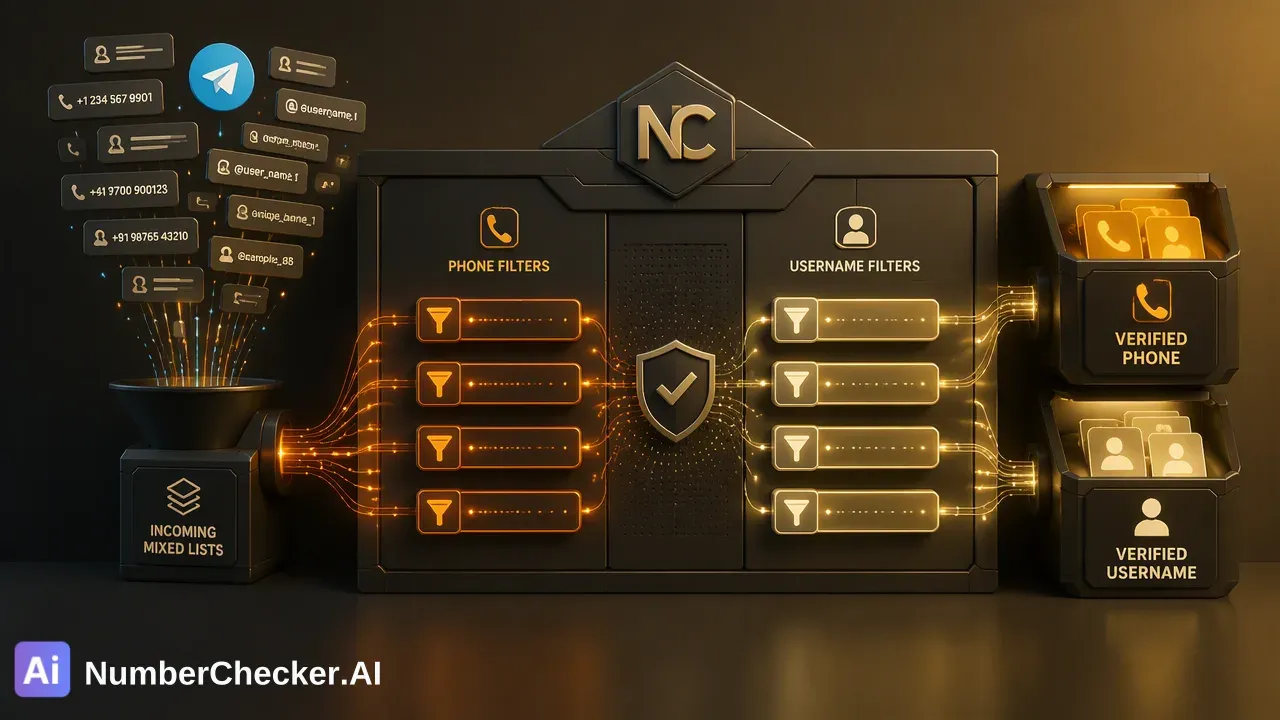
A Telegram contact verification workflow must treat usernames and phone numbers as two distinct identifier types that require separate validation logic. Phone numbers serve as the underlying account registration identifier, whereas usernames are optional, public-facing handles that do not automatically reveal the linked number. To maintain database hygiene and prevent inaccurate record merging, organizations must perform format validation on handles, use platform-specific registration signals at check time, and avoid linking multi-source identifiers without explicit confirmation.
The Distinction Between Telegram Identifiers
Telegram contact records typically arrive in customer databases through two distinct channels: international phone numbers and public usernames. Understanding the structural differences between these two identifiers is essential for designing an accurate verification process. * Phone Numbers: Phone numbers serve as primary account registration keys within Telegram. Checking a phone number evaluates whether an account exists on the network associated with that specific numeric string. * Usernames: Usernames are optional, public-facing handles that begin with an @ symbol. A user can create, alter, or delete a username without changing their underlying account or phone number, and a single account can exist without any public handle configured. Because usernames do not inherently expose or confirm an underlying phone number, treating them as interchangeable creates systemic tracking errors. Verification systems must apply input-specific rules depending on whether the submitted record is an E.164 phone string or an alphanumeric handle.
Why Verification Logic Must Differ
Attempting to route usernames and phone numbers through the same validation pipeline leads to false negatives and corrupted datasets. Each identifier requires a distinct verification pipeline that reflects how the platform handles that data type. Username verification requires pre-validation checks before querying account existence. Systems should first confirm that a username meets Telegram’s handle constraints (such as valid length, acceptable alphanumeric characters, and proper prefix handling). Once format integrity is confirmed, the handle can be evaluated using a username-specific checker—such as Telegram Username Registration Checker or Telegram Username Activity Checker—to verify account presence and retrieve available public profile information or avatar context. In contrast, phone-number verification focuses strictly on platform registration. A tool like Telegram Checker assesses whether the phone number is registered with Telegram. It does not check for handle availability, nor does it require handle format parsing. Organizations testing bulk lists must route phone records to phone registration checkers and handle strings to username checkers.
Risks of Merging Unverified Contact Data
A common operational mistake in contact management is assuming that a username and a phone number collected in the same lead form belong to the same person without independent verification. Merging these fields prematurely introduces severe risks to CRM integrity. | Operational Risk | Mechanism | Business Impact | | :--- | :--- | :--- | | Identity Mismatch | User inputs their own phone number but a friend’s or public username. | Outreach reaches unintended recipients; communications are misdirected. | | Handle Recycling | User changes or abandons a username, which is later claimed by a third party. | Stored profile records become obsolete or associate historical records with a new entity. | | Database Corruption | System merges two disparate records based on unverified matching rules. | Communication logs, engagement history, and segmentation tags become intermingled. | To prevent these issues, multi-source contact records should be stored as separate data points. Teams must verify each identifier independently and only link them when an explicit verification event—such as direct two-way confirmation—proves they represent the same individual.
Structuring Your Verification Workflow
A robust verification framework incorporates multiple check-time signals and clean storage architecture. When managing lists through bulk processing or automated pipelines, organizations should structure workflows around the following operational principles:
- Separate Ingestion and Routing: Parse incoming contact lists into distinct phone-number and username streams. Use bulk list uploads in CSV or TXT format or REST API calls according to the input type. 2. Evaluate Registration Signals: For phone lists, use tools like Telegram Checker or Telegram Days Checker to verify account presence and obtain available last-seen context. For handle lists, use Telegram Username Profile Checker or Telegram Username Activity Checker to inspect registration, public profile details, and membership context when available. 3. Differentiate Existence from Activity: A platform registration signal confirms that an account exists at check time; it is a reachability indicator, not proof of ongoing active use or guaranteed response. Where activity signals or last-seen indicators are available, use them to inform prioritization rather than treating presence alone as active engagement. 4. Maintain CRM Schema Discipline: In CRM platforms, preserve distinct properties for
telegram_phoneandtelegram_username. Store validation timestamps and registration signals alongside the individual identifier rather than applying a blanket status to the entire contact profile.
Frequently Asked Questions (FAQ)
Why do organizations need separate verification workflows for usernames and phone numbers?
Organizations must separate these workflows because usernames and phone numbers represent structurally different data points. A phone number is tied directly to account presence, whereas a username is an optional public handle that can be changed or released. Evaluating a username requires format checks and handle-specific platform queries, whereas a phone number requires an account registration check.
How should teams store Telegram contact data in a CRM system?
Teams should maintain separate, dedicated fields for Telegram phone numbers and Telegram usernames rather than forcing them into a single contact property. Multi-source identifiers should not be linked or merged into a single user profile without explicit confirmation from the user to prevent cross-contamination of records.
Get Started with NumberChecker.AI
Explore NumberChecker.AI’s supported bulk list-checking products and choose the capability that fits your workflow.
Ready to get started?
Try our WhatsApp number validation service and see the difference clean data makes.

