How to Build a Scalable Telegram Screening Workflow for High-Conversion Outreach
Learn how to build a scalable Telegram contact screening workflow using bulk registration signals to support list hygiene and optimize outreach operations.
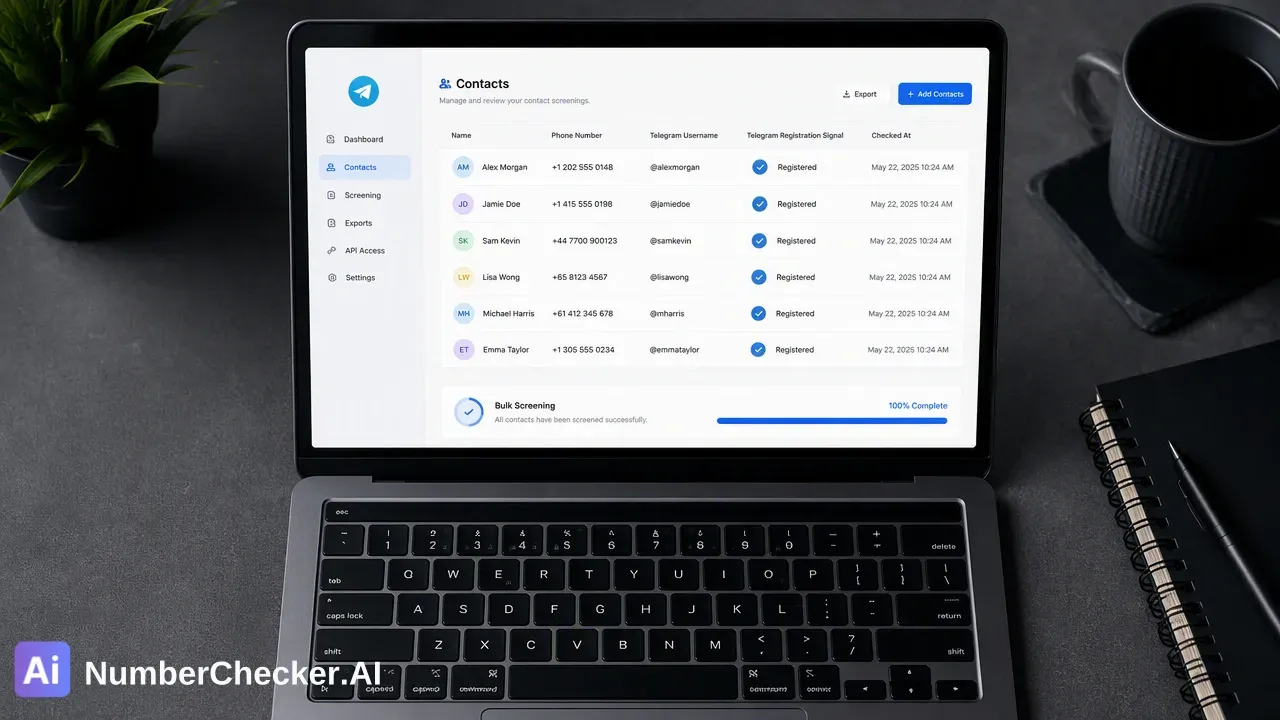
Effective Telegram outreach relies on a systematic screening process to identify registered accounts before initiating contact. By implementing bulk registration signal checks, organizations can filter out numbers lacking platform presence, optimize operational costs, and maintain cleaner contact segments for their CRM and marketing pipelines. Transitioning from manual checks to automated workflows helps teams process large datasets efficiently, providing account-related presence data to inform outreach planning.
The Importance of List Hygiene in Telegram Outreach
Raw contact databases frequently contain phone numbers that lack an associated Telegram registration. When teams attempt to process these unverified lists, they expend resources on numbers without account presence, which degrades overall operational efficiency. Systematic screening helps organizations manage this challenge by identifying Telegram registration signals before outreach begins. It is important to distinguish basic format or normalization checks from platform-registration checks. While a format check confirms a number matches standard telecommunication structures, a Telegram registration signal specifically confirms account-related presence on the platform. This process supports better resource allocation, helps teams manage operational costs, and contributes to a more structured approach to audience segmentation. By focusing efforts only on numbers with confirmed platform presence, organizations can streamline their communication pipelines.
Evolution of Screening: From Manual to Automated Workflows
Organizations often begin with manual screening, checking individual numbers for Telegram presence. While this method provides basic validation, it quickly becomes inefficient for large datasets. Manual processes consume significant time and introduce inconsistencies into data management. Automated bulk screening supports consistent, repeatable list hygiene at scale. By utilizing bulk checking of supported phone-number lists, teams can process thousands of records systematically. This transition from manual to automated workflows helps organizations maintain up-to-date CRM segments without dedicating extensive human resources to repetitive validation tasks.
Building a Scalable Screening Pipeline
Implementing a scalable screening pipeline requires integrating bulk verification tools into existing data workflows. NumberChecker.AI provides bulk workflows that support CSV or TXT list uploads for straightforward batch processing. For deeper integration, REST API access supports automated screening directly within existing CRM or data pipelines. When designing this architecture, technical teams should account for API rate limits, which restrict requests per minute and have limited concurrency. Consulting the current API documentation helps the pipeline respect these boundaries. A well-architected pipeline retrieves the Telegram registration signal and maps this account-related presence data back to the corresponding CRM record. Teams can use this data to route registered numbers to the primary outreach queue while archiving unregistered numbers. This branching logic helps maintain a clean database over time and supports systematic audience segmentation.
Best Practices for Implementation
Deploying a Telegram contact screening workflow benefits from a structured, phased approach. Organizations should conduct small-scale testing before deploying large-scale validation. This initial testing phase helps teams verify that data formats, such as CSV or TXT uploads, are processed correctly and that the resulting registration signals map accurately to internal databases. Once validated, teams can integrate these screening results into CRM segments to prioritize registered accounts. Regular list hygiene is an ongoing requirement, as contact databases degrade over time when users change numbers or leave platforms. Scheduling periodic bulk checks using CSV uploads or automated API triggers helps maintain the accuracy of CRM segments. It is important to treat the Telegram registration signal strictly as an indicator of account presence. Using this signal as one input alongside other checks helps teams build a robust, data-driven outreach strategy.
Frequently Asked Questions (FAQ)
Why do organizations need to screen Telegram contact lists?
Screening contact lists helps organizations identify numbers with a Telegram registration signal. This process filters out numbers without platform presence, which supports operational efficiency and helps manage outreach costs.
How does bulk screening support outreach operations?
Bulk screening processes large datasets systematically, replacing inefficient manual checks. By utilizing CSV or TXT list uploads and REST API access, teams can maintain consistent list hygiene and focus resources on registered accounts.
Can screening be integrated into existing CRM workflows?
Yes, organizations can integrate screening into existing workflows using REST API access. This integration supports automated validation, helping teams append account-related presence data directly to their CRM records for better segmentation.
What does a Telegram registration signal indicate?
A Telegram registration signal provides account-related presence data, indicating whether a specific phone number is associated with the platform. It serves as a decision-support tool to inform outreach planning and audience segmentation.
What is the difference between manual and API-driven screening?
Manual screening requires human operators to check individual numbers, which is time-consuming and difficult to scale. API-driven screening automates this process, supporting the bulk checking of supported phone-number lists directly within data pipelines. This automation helps teams process large volumes of data efficiently while respecting API rate limits and concurrency constraints.
Get Started with NumberChecker.AI
Explore NumberChecker.AI’s supported bulk list-checking products and choose the capability that fits your workflow.
Ready to get started?
Try our WhatsApp number validation service and see the difference clean data makes.

