How to Filter Telegram Contact Lists by Interaction History: A Practical Workflow
Learn how Telegram contact interaction screening and activity signals help teams filter bulk contact lists, prioritize outreach, and improve list hygiene.
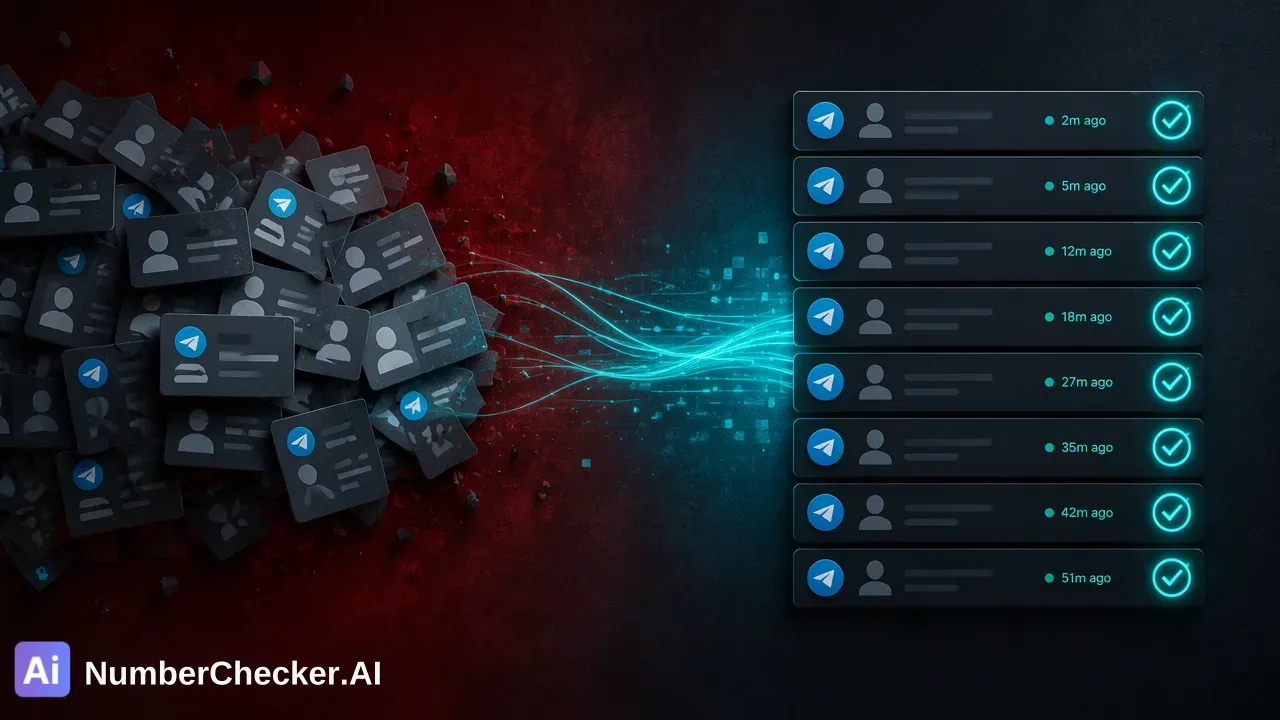
Filtering Telegram contact lists by interaction history involves moving beyond simple registration checks to evaluate activity signals. By using bulk validation tools to evaluate account presence and recent activity, organizations can prioritize reachable contacts, reduce messaging waste, and maintain cleaner databases. This workflow transforms raw lists into actionable segments, supporting outreach efforts focused on accounts with platform account presence.
The Limitations of Basic Registration Checks
A standard platform registration check answers a single question: is this phone number or username currently registered on Telegram? While this is a critical baseline for database hygiene, stopping at registration status leaves significant operational blind spots. A registered account may be dormant, abandoned, or rarely accessed by the owner. When teams direct outreach toward an entire register of confirmed accounts without distinguishing between active and inactive users, they risk wasting messaging resources on unresponsive targets. Furthermore, basic registration signals do not indicate whether an account was created years ago and left unused or if it remains a viable channel for communication. Registration status serves as the first filter to eliminate invalid or non-existent accounts, but effective list hygiene requires secondary indicators to evaluate whether those registered accounts show evidence of recent interaction.
Leveraging Activity Signals for Contact Prioritization
To build higher-value contact segments, organizations apply Telegram contact interaction screening using specialized platform signals. Rather than treating all registered records equally, activity screening introduces attributes that inform audience prioritization. Several distinct signals support this evaluation:
- Activity and Last-Seen Context: Checking available activity signals or last-seen status provides context on whether an account has interacted with the platform recently, helping teams prioritize responsive audiences. - Account Identifiers and Membership: Available identifier context and Premium membership signals provide additional depth on account characteristics. - Demographic and Profile Enrichment: Public profile details, such as avatar data or demographic context when available, offer further criteria for targeted segmentation. | Signal Type | Input Identifier | High-Level Capabilities | | :--- | :--- | :--- | | Basic Registration | Phone Number | Platform registration signal | | Days & Activity | Phone Number | Platform registration, activity signal, account identifier, membership signal | | Username Activity | Username | Platform registration, activity signal, profile enrichment, account identifier, membership signal | | Profile Enrichment | Phone Number / Username | Demographic enrichment, public profile data, activity signal | These capabilities allow organizations to separate recently active users from dormant registrations, providing the necessary context for efficient messaging workflows.
A Practical Workflow for Bulk List Filtering
Implementing contact interaction screening follows a structured bulk workflow that integrates with existing CRM and messaging tools:
- Prepare and Ingest Contact Lists: Compile raw phone numbers or usernames into standard CSV or TXT formats. Organizations running programmatic workflows can also connect directly via REST API. 2. Run Baseline Registration Filtering: Process the list through initial verification to identify numbers with verified platform accounts, removing non-registered records immediately. 3. Apply Activity and Interaction Checks: Screen the remaining registered records through tools that provide activity signals, such as Telegram Days Checker or Telegram Username Activity Checker. This surfaces last-seen context and interaction indicators. 4. Segment and Categorize: Divide the validated dataset into actionable operational tiers:
- Tier 1 (High Priority): Accounts with verified registration and recent activity signals. - Tier 2 (Secondary Review): Registered accounts with older or undetermined activity signals. - Tier 3 (Exclude/Archive): Non-registered numbers or accounts showing no platform presence. 5. Export to Workflow Systems: Export the segmented lists back into internal CRMs or messaging platforms, assigning priority schedules based on the assigned tier.
Benefits of Data-Driven List Hygiene
Adopting a systematic screening process provides significant operational advantages over unvalidated outreach:
- Reduced Messaging Waste: Filtering out unreachable or long-inactive accounts helps teams focus messaging budgets on recipients who maintain an active presence on the platform. - Protection of Sender Reputation: Sending high volumes of messages to dormant, unmonitored, or invalid accounts can trigger platform scrutiny or spam reporting. Maintaining list hygiene supports sustainable sender standing. - Re-screening Historical Data: Lists degrade over time as users abandon numbers or change platform settings. Periodic re-screening allows teams to refresh existing databases, identifying which previously active accounts remain reachable. - Multi-layered Filtering: Combining interaction indicators with profile enrichment or demographic context creates more precise audience segments, supporting tailored communication strategies. By treating list maintenance as an ongoing operational practice rather than a one-time task, organizations maintain reliable contact databases that support efficient outreach operations.
Frequently Asked Questions (FAQ)
Why is interaction history important for Telegram outreach?
Interaction history provides operational context beyond basic account presence. While a registration check indicates whether an account exists at check time, activity signals help teams identify which contacts have recent platform interaction, supporting more relevant segmentation and reduced messaging waste.
How does bulk checking differ from manual verification?
Manual verification requires inspecting individual accounts inside the application, which does not scale for commercial contact databases. Bulk checking allows organizations to submit contact lists via CSV or TXT uploads or REST API access, checking platform presence and activity signals across thousands of records in a structured process.
Get Started with NumberChecker.AI
Explore NumberChecker.AI’s supported bulk list-checking products and choose the capability that fits your workflow.
Ready to get started?
Try our WhatsApp number validation service and see the difference clean data makes.

