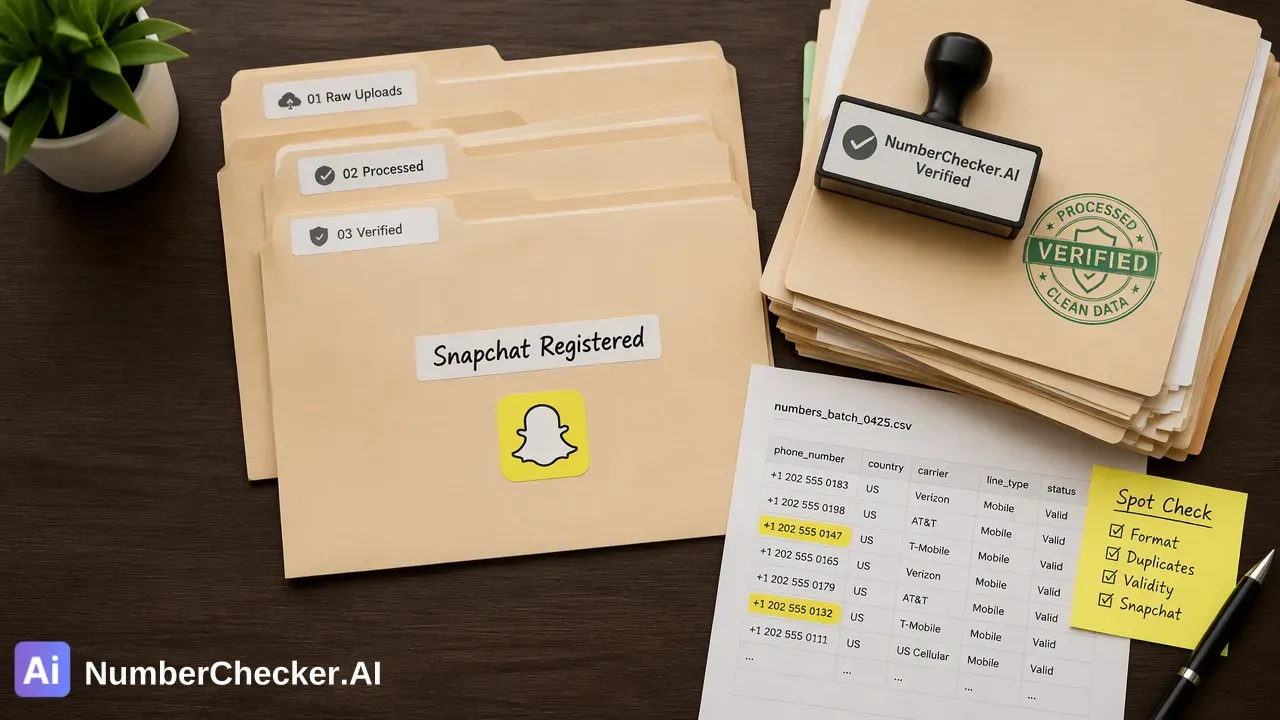
How to Check Snapchat Registration Signals Across a Phone List
Learn how to use a Snapchat checker for bulk phone lists. Understand registration signals, CSV/TXT uploads, and REST API workflows for data segmentation.
A Snapchat registration signal identifies whether a phone number is currently associated with an account on the Snapchat platform. By using bulk-processing workflows—such as CSV or TXT file uploads and REST API integration—organizations can efficiently segment their contact lists based on this presence signal. This account-related data helps teams prioritize records and informs internal data management strategies without relying on assumptions about identity, ownership, or active usage.
Understanding Snapchat Registration Signals
When organizations manage large contact databases, understanding which phone numbers are associated with specific platforms can support more effective data segmentation. A Snapchat registration signal provides a specific data point: it indicates whether a given phone number is currently registered with a Snapchat account at the time of the check. This platform signal is strictly scoped to account-related presence. It is important for technical and business teams to understand the boundaries of this data. Instead, it serves as a foundational data point that helps organizations understand the platform footprint of their contact lists. By isolating numbers that return a positive registration signal, teams can make informed decisions about how to route, segment, or prioritize those records within their internal systems.
Bulk Processing Workflows for Phone Lists
Processing individual phone numbers manually is inefficient for enterprise data management. The core workflow for a Snapchat checker relies on bulk processing capabilities, allowing organizations to evaluate large lists of phone numbers systematically. NumberChecker.AI supports multiple ingestion methods to accommodate different technical requirements and operational workflows. For teams operating without direct engineering support, bulk workflows support standard file uploads. Users can compile their phone number lists into CSV or TXT formats and process them directly. This file-based approach is highly effective for periodic list hygiene, campaign preparation, or one-off data audits. For automated or continuous data operations, organizations can utilize REST API access. Integrating the bulk checking workflow via a REST API allows internal systems to programmatically submit phone number lists and retrieve registration signals. This method supports seamless integration into existing customer relationship management (CRM) platforms, data pipelines, or risk evaluation workflows. Regardless of the ingestion method, the output provides a clear, structured indication of Snapchat account presence for each submitted phone number, enabling immediate downstream processing.
Applying Signals to Data Segmentation
Once a bulk list has been processed, the resulting Snapchat registration signals can be applied directly to organizational data segmentation strategies. Because the signal confirms platform presence, it acts as a reliable filter for categorizing contacts. Teams can divide their databases into distinct segments based on which numbers are associated with a Snapchat account and which are not. This segmentation supports customer-defined review processes. Risk and compliance teams might use the signal to cross-reference user-provided information during an onboarding workflow, adding a layer of context to their evaluation. By integrating these signals into broader data management practices, organizations can prioritize their resources more effectively. Records that return a positive registration signal can be routed to specific workflows tailored for that platform’s ecosystem, while numbers without an associated account can be excluded from those specific operational tracks. This targeted approach helps teams maintain organized, actionable data without overstepping the boundaries of what a platform registration signal actually represents.
Integrating the Snapchat Checker into Internal Systems
Successful implementation of a Snapchat checker requires aligning the bulk processing capabilities with existing internal systems. When utilizing the REST API, technical teams can design automated triggers that initiate a bulk check whenever a new batch of phone numbers enters the database. This ensures that the platform presence data remains current and actionable for downstream applications. For file-based workflows using CSV or TXT uploads, data operations teams can establish routine schedules for list processing. By exporting contact lists from their primary databases, running them through the bulk checker, and importing the appended registration signals back into their systems, organizations maintain a high standard of data organization. It is crucial that the architecture handling these signals treats them strictly as account-presence indicators. Internal logic should not be configured to assume that a positive signal equates to a reachable or active user. Instead, the system should use the signal to flag the record for appropriate downstream handling, ensuring that all subsequent actions are based on accurate, verified product capabilities rather than inferred user behavior.
Frequently Asked Questions (FAQ)
What file formats are supported for bulk checking?
The bulk processing workflows support standard CSV and TXT file uploads. This allows teams to process large lists of phone numbers efficiently without requiring complex technical integration.
How can technical teams automate the bulk checking workflow?
Technical teams can automate the workflow by utilizing REST API access. This allows internal systems to programmatically submit lists of phone numbers and retrieve registration signals for continuous data segmentation and processing.
Get Started with NumberChecker.AI
Explore NumberChecker.AI’s supported bulk list-checking products and choose the capability that fits your workflow.
Ready to get started?
Try our WhatsApp number validation service and see the difference clean data makes.

