Optimizing SMS Messaging Budgets: A Data-Driven Approach to List Hygiene
Discover reduce SMS costs best practices using bulk list hygiene, carrier intelligence, and platform registration signals to optimize messaging budgets.
Reducing SMS costs requires a proactive approach to list hygiene and contact data management. By utilizing bulk checking services to identify line types, carrier information, and platform registration signals, organizations can segment their contact lists effectively before initiating outreach. This systematic evaluation helps direct messaging resources toward compatible numbers, minimizing wasted spend on unsupported records. Implementing these best practices helps teams refine their routing strategies, allocate budgets efficiently, and maintain cleaner data pipelines for high-volume communications.
The Impact of List Hygiene on Messaging Spend
Organizations executing high-volume communications frequently encounter escalating budgets due to outdated, unverified, or poorly formatted contact data. Attempting to route text messages to invalid formats, disconnected lines, or incompatible endpoints incurs unnecessary carrier fees and degrades overall campaign efficiency. Implementing a systematic approach to list hygiene helps teams review and refine contact lists before any messages are transmitted. The core workflow for managing these large datasets relies on the bulk checking of supported phone-number or email lists. Rather than evaluating contacts individually at the point of send, organizations can process records in volume to identify unsupported numbers early in the data pipeline. This foundational step helps allocate messaging budgets exclusively to viable contacts. By establishing a routine of bulk list hygiene, teams can support more accurate financial forecasting, reduce the volume of undeliverable message attempts, and inform internal decisions regarding channel allocation and campaign scaling.
Leveraging Carrier Intelligence for Routing Efficiency
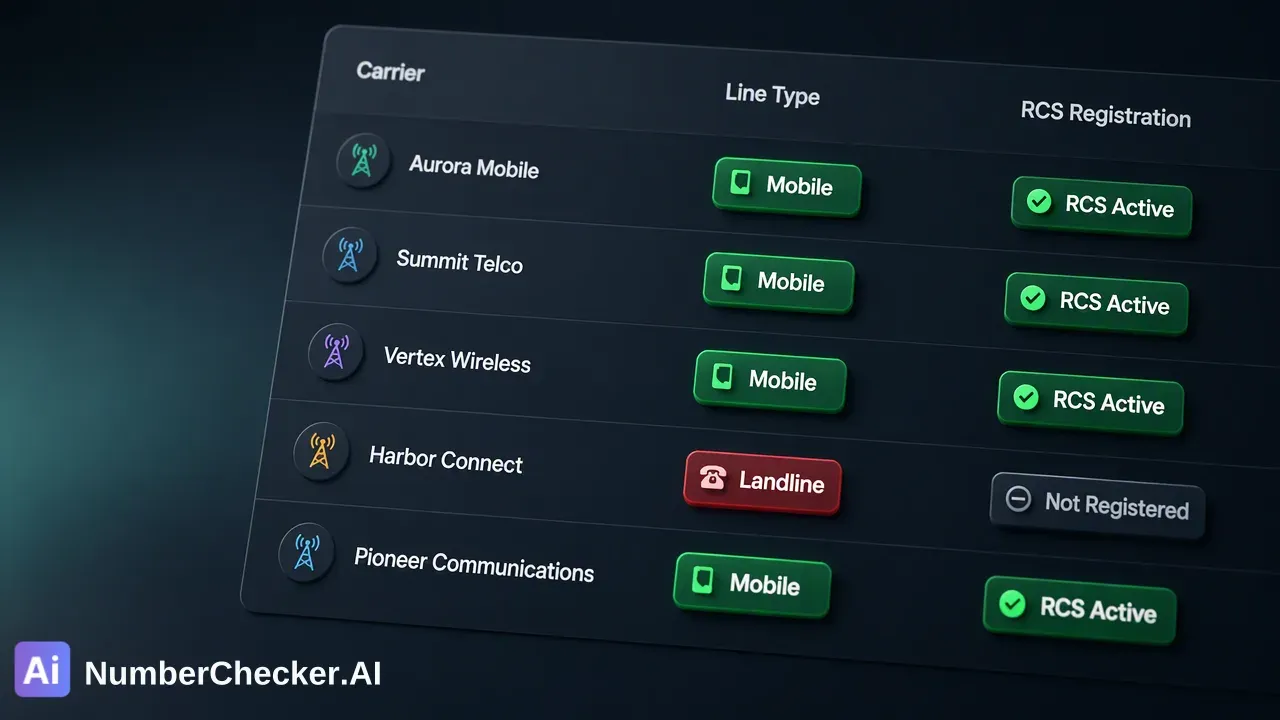
Carrier intelligence involves the identification of carrier, line type, country, and regional context for phone numbers across supported countries. By utilizing a Global Carrier Checker, teams can systematically identify the line type associated with each record in their database. Distinguishing mobile from non-mobile numbers supports routing SMS traffic exclusively to compatible mobile endpoints. Numbers identified as landlines can be confidently suppressed from the SMS queue or redirected to alternative communication channels, such as voice calls. Furthermore, understanding the country and regional context helps organizations anticipate international routing costs, helping them adjust their messaging strategies based on regional pricing tiers. This data-driven segmentation supports strict cost management by filtering out records that structurally cannot receive standard text messages.
Segmenting Audiences with Platform Registration Signals
Beyond basic carrier and line-type data, organizations can further optimize their messaging budgets by segmenting audiences based on platform registration signals. A platform registration signal indicates account-related presence for a specific messaging platform at the time of the check. For example, an Rcs Checker identifies phone numbers that support RCS or Google Messages. This capability provides a platform registration signal and a rich messaging capability signal, which directly informs rich-messaging audience planning. By confirming which numbers have an active RCS registration, teams can segment their lists to send advanced, rich media campaigns only to compatible accounts, while routing standard, lower-cost SMS to the remaining mobile numbers. This targeted approach helps control the costs associated with premium messaging tiers by routing higher-cost rich messages only to numbers with the corresponding platform presence.
Implementing a Bulk-First Workflow
Transitioning from reactive list cleaning to a proactive, bulk-first workflow is essential for scaling cost-reduction strategies effectively. NumberChecker.AI supports bulk workflows via CSV or TXT list uploads, as well as REST API access for automated processing. This flexibility supports integrating bulk checks directly into existing data ingestion and campaign management pipelines. A standard implementation involves uploading a CSV or TXT file of prospective contacts to retrieve carrier intelligence and platform registration signals in a single batch process. Teams can then filter the output to remove incompatible line types or segment users by platform presence. For continuous operations, utilizing REST API access supports automating this segmentation, helping to populate outbound messaging queues with validated data. This systematic processing supports efficient resource allocation, reduces manual data handling, and helps maintain strict control over messaging expenditures across large-scale operations.
Frequently Asked Questions (FAQ)
How does carrier intelligence help reduce SMS costs?
Carrier intelligence helps reduce SMS costs by identifying the line type, carrier, and regional context of phone numbers across supported countries. Filtering out non-mobile numbers before sending campaigns helps reduce wasted spend on incompatible endpoints.
What is the difference between carrier intelligence and platform registration signals?
Carrier intelligence provides structural information about a phone number, such as its line type and the associated telecom carrier. In contrast, a platform registration signal indicates account-related presence for a specific messaging service, such as RCS or Google Messages. While carrier data informs general SMS routing, platform signals help teams plan targeted campaigns for specific rich-messaging ecosystems.
Why is bulk list checking preferred over single-number lookups for cost management?
Bulk list checking supports processing large datasets efficiently, which is critical for high-volume messaging campaigns. By supporting CSV or TXT list uploads and REST API access, bulk workflows help teams evaluate and segment entire contact lists prior to deployment. This proactive approach helps identify and remove unsupported records at scale, optimizing the overall messaging budget.
How do platform registration signals support rich-messaging audience planning?
Platform registration signals identify phone numbers that support specific services, such as RCS or Google Messages. By utilizing an Rcs Checker, organizations receive a rich messaging capability signal that confirms account-related presence. This supports audience segmentation, helping to route premium rich-media messages only to compatible numbers, while standard SMS is used for the rest of the list.
Get Started with NumberChecker.AI
Explore NumberChecker.AI’s supported bulk list-checking products and choose the capability that fits your workflow.
Ready to get started?
Try our WhatsApp number validation service and see the difference clean data makes.

