RCS Messaging for Business: Modernizing Contact List Strategy
Discover how RCS messaging for business enhances reach, verified sender identity, and modern contact list hygiene across Android and iOS devices.
RCS messaging for business transforms enterprise communication by providing an upgraded messaging protocol that supports rich, interactive, and branded exchanges within native mobile messaging applications. With major mobile ecosystems including iOS expanding support for RCS alongside Android, organizations can share verified sender profiles, interactive buttons, and high-resolution media. Maximizing the value of this channel requires a modernized contact list strategy that identifies which recipients support the protocol, understands carrier fallback paths, and cleans database records prior to deployment.
The Evolution of Business Messaging: Why RCS Matters
For decades, Short Message Service (SMS) served as the primary universal standard for application-to-person mobile communication. While SMS provided ubiquitous reach across network providers and device manufacturers, its technical structure restricted organizations to plain text, rigid 160-character limits, and unverified sender identifiers that malicious actors frequently spoofed. Multimedia Messaging Service (MMS) introduced image and audio capabilities, yet it remained constrained by carrier compression, inconsistent media rendering, and elevated transmission costs.
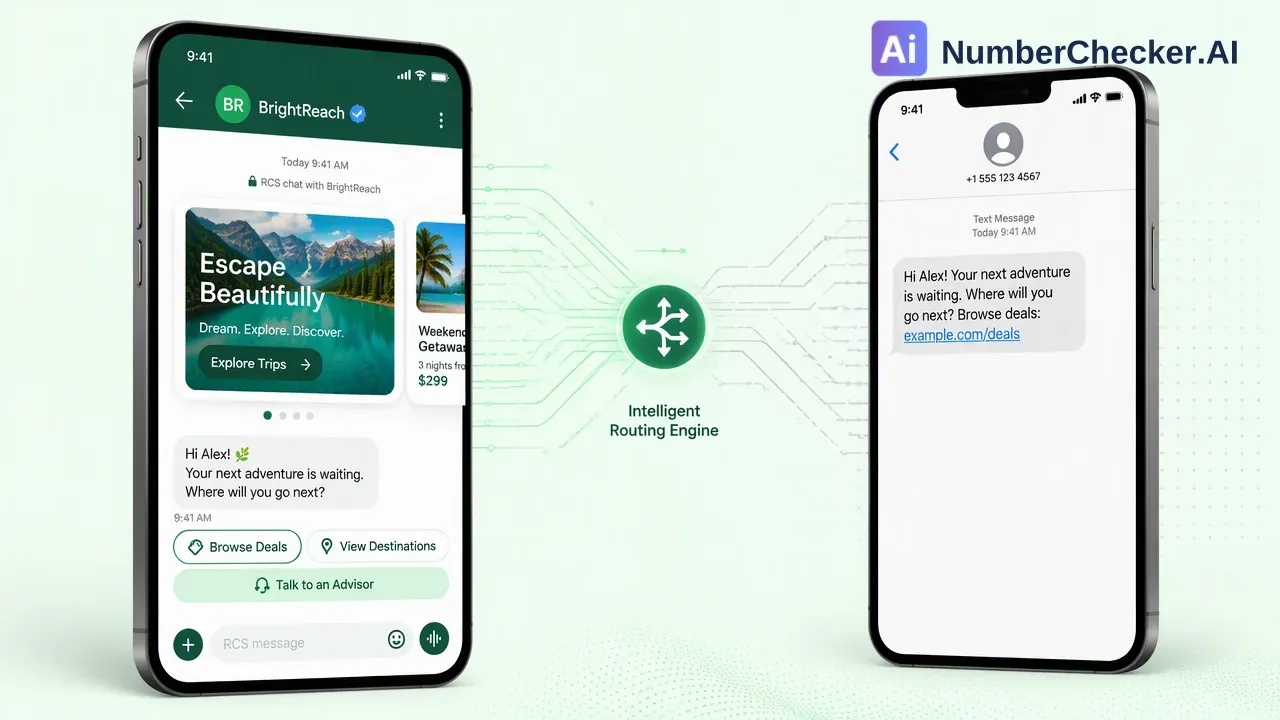
Rich Communication Services (RCS) represents the modern evolution of cellular messaging standards. Designed as an upgraded telecom standard governed by the GSMA, RCS brings mobile web capabilities directly into native device messaging interfaces. Through RCS messaging for business, enterprises can distribute branded content cards, high-definition carousels, automated quick-action chips, calendar scheduling widgets, and verified transaction receipts without requiring users to download third-party software.
The adoption of RCS by Apple across modern iOS software versions represents a transformative milestone for global digital reach. Historically, rich native messaging experiences were fractured across proprietary ecosystems and Android devices operating Google Messages. The cross-platform presence of RCS across both major smartphone operating systems creates a unified channel where commercial senders can reach mainstream audiences with rich media under standardized network protocols.
Building Trust Through Verified Digital Identity
Recipient wariness toward unknown telephone numbers and suspicious text messages has created significant hurdles for conventional mobile marketing and notification channels. Unbranded SMS messages originating from arbitrary short codes or ten-digit long codes leave customers uncertain about the authenticity of sensitive notices, including password resets, account security alerts, and delivery updates.
RCS mitigates identity spoofing by requiring commercial senders to complete formal business verification before gaining sending credentials. Unlike traditional phone communications where sender labels can be masked, RCS operates through a verified commercial infrastructure overseen by carriers and platform aggregators. Participating organizations undergo identity vetting to bind their official company name, registered trademark logo, custom brand colors, and verified website address to their messaging profile.
When a customer receives an incoming message through an active RCS connection, the native mobile app presents the verified business profile directly in the conversation header. The interface displays an official verification badge, reassuring recipients that the transmission originates from an authenticated enterprise entity rather than an impersonator. This verified digital identity establishes baseline credibility, elevates consumer trust, and encourages direct engagement with interactive prompts.
Managing Reachability: The Role of Fallback and Verification
While the reach of RCS continues to broaden globally, device readiness is not universal across all geographic territories, network operators, or legacy hardware models. An effective messaging strategy accounts for varying degrees of technical readiness across enterprise databases.
To safeguard communication continuity, modern commercial messaging frameworks implement automatic fallback mechanisms. If an organization transmits an interactive RCS message to a recipient whose current handset, firmware revision, or regional wireless provider lacks protocol support, the routing infrastructure automatically downgrades the message payload into standard SMS or MMS format. This design ensures that critical transactional information reaches the intended mobile subscriber regardless of device limitations.
| Feature Dimension | Traditional SMS / MMS | Rich Communication Services (RCS) |
|---|---|---|
| Content Richness | Plain text (160 characters) or compressed media | High-resolution media, interactive cards, carousels |
| Sender Authentication | Unverified numeric short codes or long codes | Cryptographically verified commercial sender profile and brand logo |
| User Interaction | Manual keyword replies (e.g., reply ‘YES’) | Dynamic suggested replies, calendar events, embedded actions |
| Protocol Fallback | Terminal protocol (no lower fallback) | Automatic fallback to SMS or MMS when unsupported |
| Audience Reach | Universal legacy phone support | Modern Android devices and updated iOS operating systems |
Although automated fallback prevents message abandonment, relying entirely on runtime fallback introduces operational trade-offs. Rich interactive components, such as multi-card carousels or integrated selection chips, translate poorly into plain text, frequently producing fragmented messages that confuse the end user. Pre-campaign verification allows infrastructure managers to evaluate recipient lists in advance, segmenting contacts by capability to deploy channel-appropriate creative assets.
Modernizing Your Contact List Strategy
Adopting RCS messaging for business requires shifting from static spreadsheet distribution to structured, capability-aware list management. Operating an efficient messaging engine involves validating database integrity, standardizing telephone records, and evaluating protocol support prior to launching major customer communications.
NumberChecker.AI supports this modernization process through specialized bulk telephone-number and email list validation capabilities. To establish baseline hygiene, organizations can run lists through Number Cleaner, which standardizes contact records into international E.164 formatting, strips duplicate entries, and removes malformed syntax before downstream checks take place. For phone list processing, bulk uploads accommodate structured CSV or TXT files arranged with one number per line containing the relevant country calling code.
Following list normalization, organizations deploy the dedicated RCS Checker. The RCS Checker evaluates telephone databases to identify phone numbers that support RCS or Google Messages for rich-messaging audience planning. Incorporating this platform-registration signal into data workflows offers concrete operational advantages:
- Segmented Asset Distribution: Teams can route interactive rich-card creative assets exclusively to validated RCS-capable recipients, reserving concise plain-text formats for SMS fallback routes.
- Budget Efficiency: Identifying channel capability before transmission reduces unnecessary routing overhead and formatting adjustments incurred during runtime protocol conversions.
- Reliable Planning Context: Audience intelligence signals give campaign strategists clear visibility into technological readiness across customer cohorts, informing media investment decisions.
A platform-registration signal indicates platform-specific reachability at check time. While it provides essential data regarding whether a phone number supports the RCS protocol, it serves as decision-support intelligence rather than proof of subscriber identity, real-time message open rates, or legal consent. Organizations must ensure that all recipient databases comply with regional consent regulations before initiating outreach.
Frequently Asked Questions (FAQ)
What is the primary benefit of RCS for business messaging?
RCS messaging for business upgrades standard text messaging into an interactive, branded channel. It allows organizations to display authenticated business names and logos, send rich visual media, and provide suggested reply buttons directly inside recipient messaging inboxes.
How does RCS handle devices that do not support the protocol?
When an RCS message is directed to a recipient device, mobile operating system, or wireless carrier network lacking RCS capability, the commercial messaging infrastructure automatically routes the communication through standard SMS or MMS fallback channels to maintain message transmission.
Why is list verification important for RCS campaigns?
List verification confirms whether target phone numbers possess active platform registration and protocol support before teams launch an outreach campaign. Pre-campaign evaluation helps organizations segment audiences between rich interactive experiences and traditional plain-text pathways, supporting more predictable campaign operations and reduced routing waste.
Can organizations use bulk verification to identify RCS-capable numbers?
Yes. NumberChecker.AI provides an RCS Checker designed to identify phone numbers that support RCS or Google Messages for rich-messaging audience planning across bulk telephone lists.
Get Started with NumberChecker.AI
Explore NumberChecker.AI’s supported bulk list-checking products and choose the capability that fits your workflow.
Ready to get started?
Try our WhatsApp number validation service and see the difference clean data makes.

