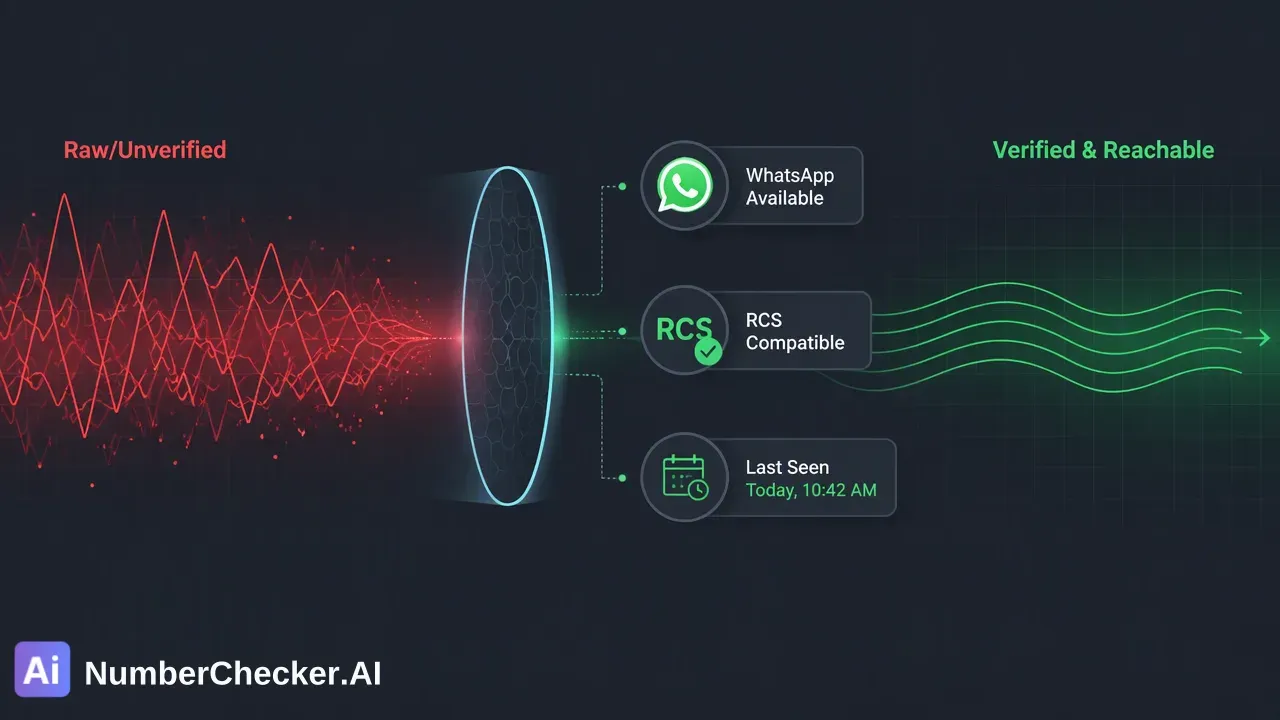
How to Transform Raw Contact Lists into Qualified Messaging Leads
Learn how to build a messaging lead qualification workflow by standardizing data, verifying platform registration, and segmenting contacts for outreach.
Transforming raw contact lists into qualified leads requires a structured messaging lead qualification workflow: standardizing data formats, verifying platform registration status, and segmenting contacts based on business context. By using bulk verification to identify active accounts on platforms like WhatsApp, Viber, or RCS, teams can focus their outreach efforts on reachable contacts, reducing wasted resources and improving campaign alignment. This multi-stage process combines data cleaning, platform-specific status verification, and CRM-based lead prioritization to support more efficient operations.
The Challenge of Raw Contact Data
Unverified, messy contact lists present a significant operational hurdle for organizations attempting to scale their communications. Raw lists often contain unreachable or incompatible numbers, which can drain resources and skew campaign metrics. When teams initiate outreach without prior validation, they risk directing effort toward numbers that lack the necessary platform accounts. Standardization is the first step in any professional messaging workflow. Before assessing whether a contact is a viable prospect, organizations must confirm the underlying data is formatted correctly and ready for systematic checking. Without this foundational hygiene, downstream verification efforts become inefficient, and teams lose the ability to accurately measure the success of their outreach initiatives.
Standardizing and Cleaning Your Database
Effective data hygiene begins before any platform verification occurs. Standardizing phone number formats is a technical prerequisite for accurate verification. Organizations must parse and format raw inputs into consistent international standards to support bulk checking tools in processing the data correctly. During this cleaning phase, retaining original lead source and interaction history is vital for later segmentation. If teams strip away the historical context of a lead while formatting the number, they lose critical business intelligence needed for prioritization. A robust messaging lead qualification workflow maintains this metadata alongside the cleaned contact details. By combining standardized formats with preserved CRM history, organizations build a reliable foundation for the next stage of the process: determining which numbers actually possess the required messaging accounts.
Leveraging Platform-Specific Verification
Once data is standardized, organizations can use bulk checking workflows via CSV uploads, TXT list uploads, or REST API access to determine platform presence. Platform registration signals confirm account presence on services like WhatsApp, Viber, or RCS at the time of the check. For example, a WhatsApp Days Checker provides a platform registration signal alongside available activity or last-seen context, while an RCS Checker identifies phone numbers that support RCS or Google Messages for rich-messaging audience planning. A platform registration signal merely indicates that an account exists on the specified network. However, identifying these technical prerequisites helps teams filter out incompatible numbers before launching campaigns. By isolating the contacts that possess the necessary platform accounts, organizations can direct their messaging resources more efficiently and avoid attempting to send rich media or platform-specific messages to unsupported numbers.
Strategic Segmentation for Outreach
After verifying platform registration, the final stage of a messaging lead qualification workflow involves prioritizing leads based on verification results and business context. Treating all ‘active’ accounts as equal priority ignores business context and can lead to misaligned outreach efforts. A newly registered account with no prior interaction history requires a different approach than a long-standing contact with extensive CRM data. Organizations should segment lists by lead stage—such as distinguishing a new inquiry from historical data—to optimize outreach timing. Verification signals, such as available activity context from a Viber Days Checker or business-profile context from a WhatsApp Days Checker, can inform these internal decisions. Integrating these verification signals back into a Customer Relationship Management (CRM) system is a critical step. When teams append platform registration data—such as identifying which numbers support RCS or Google Messages—directly to existing contact records, they create a centralized view of lead viability. This consolidated data supports advanced filtering, helping marketing and sales departments build highly targeted lists. For instance, a campaign designed around rich media can be routed exclusively to contacts with confirmed RCS capabilities, while standard text outreach can be reserved for others. By combining the technical confirmation of platform presence with CRM-based lead prioritization, teams can structure their campaigns to address the most relevant prospects first.
Frequently Asked Questions (FAQ)
How does bulk verification improve messaging campaign efficiency?
Bulk verification improves efficiency by helping teams process large lists of contacts via CSV, TXT uploads, or REST API access before initiating outreach. By identifying which numbers possess the necessary platform accounts—such as RCS capabilities for rich-messaging audience planning—organizations can filter out incompatible or unregistered numbers. This process helps teams focus their resources on viable contacts, reducing wasted effort and supporting more accurate campaign planning.
What is the role of CRM integration in a messaging lead workflow?
CRM integration plays a critical role in retaining the original lead source and interaction history alongside verification results. Effective messaging outreach requires a multi-stage process that combines data cleaning, platform-specific status verification, and CRM-based lead prioritization. By maintaining historical context, teams can segment their verified lists based on lead stage, supporting outreach timing and messaging strategies that align with the prospect’s relationship with the organization.
Get Started with NumberChecker.AI
Explore NumberChecker.AI’s supported bulk list-checking products and choose the capability that fits your workflow.
Ready to get started?
Try our WhatsApp number validation service and see the difference clean data makes.

