Registration vs. Activity: A Framework for Optimizing Messaging Contact Lists
Learn how messaging contact list activity screening helps teams move beyond basic registration checks to prioritize responsive users and improve outreach ROI.
While registration checks confirm that a contact exists on a specific platform, they do not indicate user engagement. Messaging contact list activity screening—using signals such as last-seen status, account age, or profile updates—helps teams prioritize high-value, responsive users. By combining baseline registration validation with activity signals, organizations can reduce wasted outreach, focus resources on segments most likely to engage, and ultimately support a stronger messaging ROI. Implementing this framework allows data and marketing teams to transition from simple list validation to strategic audience segmentation.
The Foundation: Why Registration Checks Are Not Enough
Basic validation is an essential first step for any bulk messaging pipeline. Registration checks act as a first-pass filter to remove invalid or non-existent numbers from a database. This process confirms the presence of an account on a specific messaging or social platform, ensuring that outreach is not directed at disconnected lines or unregistered users. However, confirming that an account exists is only a baseline hygiene step. A registration signal does not predict user behavior, nor does it indicate whether the account is actively monitored by the user. Relying solely on registration data means organizations may allocate resources toward silent, abandoned, or rarely used accounts. This approach reduces the overall efficiency of the outreach campaign and can skew performance metrics. To build a highly responsive contact list, teams must move beyond basic presence validation and incorporate deeper engagement signals into their data hygiene practices.
The Strategic Advantage of Activity Screening
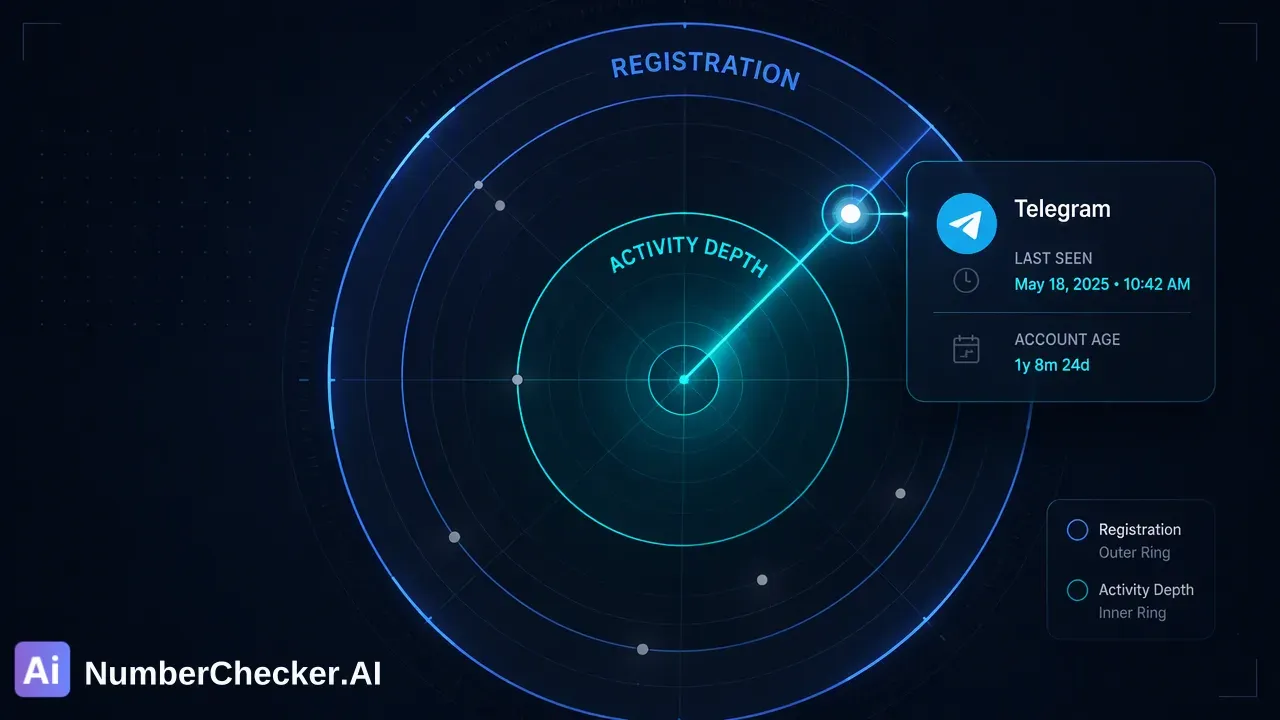
To optimize contact lists, teams must look beyond basic account presence. Activity screening identifies users who are actually engaging with the platform, reducing waste on silent or abandoned accounts. By evaluating account-level signals, organizations can gauge the likelihood of user engagement and prioritize their outreach accordingly. Different platforms offer distinct activity signals that inform this screening process. For example, the Telegram Avatar, Age, Gender & Others Checker provides available profile, demographic, and activity enrichment. Teams can use Telegram account age and activity signals to prioritize outreach to long-term, active users over newly created or inactive accounts. Similarly, the Viber Days Checker checks Viber account presence and provides available activity or last-seen context, alongside available internal account-identifier context. These activity signals inform internal decisions, allowing teams to segment audiences based on recent engagement rather than just platform registration. This strategic advantage ensures that high-priority messages are directed toward the most active segments of a database.
Building a Multi-Layered Screening Workflow
Effective list management requires a structured approach that combines multiple verification layers. Because user status changes over time, data hygiene should be a continuous process rather than a one-time event. A multi-layered workflow begins with standardizing data formats and cleaning lists to improve the accuracy of subsequent checks. Once the baseline registration filter removes invalid contacts, the secondary layer applies activity screening. Segmenting lists by activity level allows for more efficient resource allocation. For instance, a workflow might categorize contacts into three tiers: highly active users who receive immediate, high-priority messaging; moderately active users scheduled for standard outreach; and inactive accounts flagged for re-engagement or removal from the primary queue. This tiered approach supports better campaign prioritization, helps teams manage their messaging infrastructure more effectively, and provides a clearer picture of the true addressable audience within a CRM or database.
Practical Application: From Raw List to Verified Audience
Implementing a multi-layered screening framework requires tools capable of handling large datasets efficiently. The core workflow for NumberChecker.AI involves the bulk checking of supported phone-number or email lists. Organizations can process these lists through bulk workflows that support CSV or TXT list uploads, making it straightforward to screen thousands of contacts simultaneously without requiring complex technical integration. For automated environments, teams can integrate these checks via REST API access. This allows internal systems to programmatically query platform registration and activity signals before executing a messaging campaign. By integrating bulk uploads or API-driven checks into the standard data pipeline, organizations can continuously screen their messaging contact lists. This continuous screening ensures that outreach efforts are consistently directed toward active, validated audience segments, maintaining high data quality even as user behavior and platform registrations evolve over time.
Frequently Asked Questions (FAQ)
What is the difference between a registration check and an activity check?
A registration check confirms the presence of an account on a specific messaging platform, acting as a baseline filter for invalid numbers. An activity check evaluates account-level signals—such as last-seen status, profile updates, or account age—to help gauge the likelihood of user engagement and support audience prioritization.
How often should contact lists be screened for activity?
Data hygiene should be a continuous process. Because user status, platform registration, and activity levels change over time, regular screening helps maintain list accuracy and supports efficient resource allocation for ongoing campaigns.
How do organizations integrate activity screening into existing workflows?
Teams can integrate activity screening through bulk workflows that support CSV or TXT list uploads for manual processing, or via REST API access for automated, programmatic list management within existing CRM and data pipelines.
Why is segmenting lists by activity level important?
Segmenting lists by activity level allows for more efficient resource allocation. By separating highly active users from silent or abandoned accounts, organizations can focus their outreach efforts on the segments most likely to engage, thereby supporting a stronger messaging ROI.
Get Started with NumberChecker.AI
Explore NumberChecker.AI’s supported bulk list-checking products and choose the capability that fits your workflow.
Ready to get started?
Try our WhatsApp number validation service and see the difference clean data makes.

