Invalid, Inactive, and Risky Numbers: What Each Term Really Means
Learn the technical differences between invalid, inactive, and risky phone numbers to improve list hygiene and support data-driven workflows.
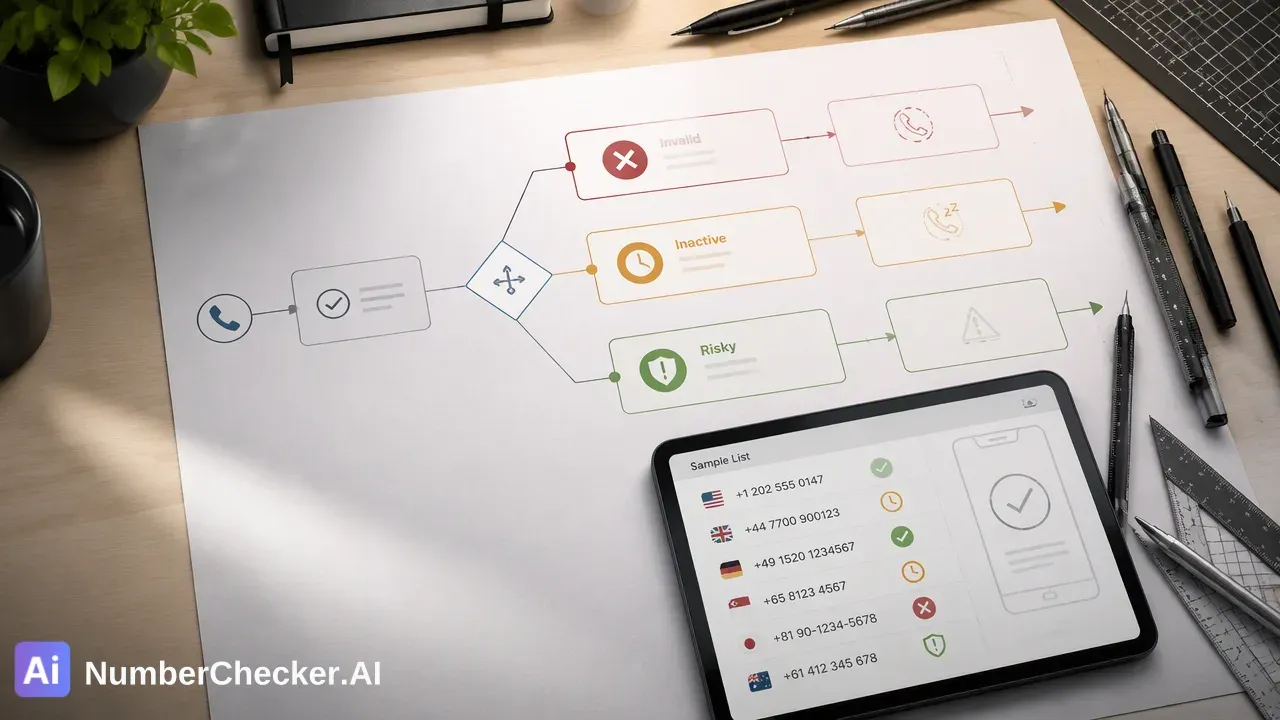
An invalid number is one that does not conform to standard numbering plans or is not currently allocated to a carrier. In contrast, an inactive number may be valid in format but is not currently associated with an active subscriber account or service. Risky numbers are those flagged by specific carrier or platform-registration signals that require further review. Distinguishing these categories helps organizations maintain accurate contact lists and supports more efficient data hygiene workflows.
Understanding Phone Number Status
Organizations managing large-scale contact lists often conflate different phone number statuses, treating all non-responsive contacts as a single category. This overlap leads to inefficient data cleaning and poor list hygiene. When teams misunderstand the distinction between an invalid vs inactive phone number, they may apply the wrong workflow rules, either discarding potentially useful data or retaining numbers that offer no value. Categorizing phone numbers based on distinct signals—such as carrier intelligence and platform registration—provides essential context for data-driven teams. By clarifying these terms, organizations can optimize their bulk checking workflows and make better-informed decisions about their contact data.
Invalid Numbers: The Format and Allocation Gap
The most fundamental category in list hygiene is the invalid number. An invalid number is defined as a number that does not conform to standard numbering plans or is not currently allocated to a carrier. This status indicates a structural or allocation gap at the network level. Identifying these numbers is typically the first step in a data hygiene process, as they lack the basic prerequisites for communication. Global Carrier Checker tools provide carrier intelligence and location signals that help identify whether a number is allocated to a recognized carrier across supported countries. Removing invalid numbers supports cleaner datasets and informs baseline list accuracy.
Inactive Numbers: The Subscriber Status
A common point of confusion arises when comparing invalid and inactive numbers. An inactive number is one that may be valid in format but is not currently associated with an active subscriber account or service. Unlike an invalid number, which fails basic allocation or formatting checks, an inactive number passes those initial criteria but lacks a current subscriber relationship. This distinction is critical for organizations evaluating their contact lists. A number might be structurally sound and allocated to a carrier, yet still be inactive. Recognizing this subscriber status helps teams refine their outreach strategies, as treating inactive numbers the same as invalid ones obscures the actual state of the contact data.
Risky Numbers: Interpreting Signals
Beyond basic validity and subscriber status, teams must also evaluate risky numbers. A risky number is identified through specific signals, such as carrier intelligence or platform registration patterns, that may require additional review before inclusion in outreach lists. These signals serve as decision-support inputs rather than absolute proof of fraud or identity. For example, carrier intelligence provides context on line type, country, and regional context. Meanwhile, platform registration signals—such as those identified by an RCS Checker—indicate account-related presence on a specific platform like RCS or Google Messages. By interpreting these distinct signals, organizations can flag risky numbers and route them for appropriate internal review.
Optimizing Your List Hygiene Workflow
Implementing a precise categorization strategy requires the right operational approach. The core workflow for managing these distinct statuses is bulk checking of supported phone-number lists. Bulk workflows support CSV or TXT list uploads, allowing teams to process large datasets efficiently. For automated environments, REST API access is also supported, enabling organizations to integrate these checks directly into their data pipelines. When utilizing these workflows, teams can apply different products to expose different high-level capabilities. For instance, an Advanced US Carrier Checker can identify carrier, line type, and regional context specifically for United States and Canada phone numbers. By leveraging bulk checking workflows to separate invalid, inactive, and risky numbers, organizations can systematically improve their list hygiene and support better audience planning.
Frequently Asked Questions (FAQ)
What is the difference between a carrier signal and a platform registration signal?
Carrier intelligence provides context on the underlying network infrastructure, such as identifying the carrier, line type, country, and regional context for a phone number. In contrast, a platform registration signal indicates account-related presence on a specific service, such as RCS.
Can a number be valid but inactive?
Yes. An inactive number is specifically defined as a number that may be valid in format and allocated to a carrier, but is not currently associated with an active subscriber account or service. This means the number passes structural and allocation checks but lacks a current subscriber relationship.
How should teams handle numbers flagged as risky?
Numbers identified as risky through carrier intelligence or platform registration patterns should be treated as requiring additional review before inclusion in outreach lists. These signals serve as decision-support inputs. Organizations can use this context to inform internal decisions, such as routing the numbers for further evaluation or excluding them from specific audience planning segments, rather than treating the signal as absolute proof of identity or fraud.
Get Started with NumberChecker.AI
Explore NumberChecker.AI’s supported bulk list-checking products and choose the capability that fits your workflow.
Ready to get started?
Try our WhatsApp number validation service and see the difference clean data makes.

