How to Improve Your Instagram Audience Match Rate Through Data Hygiene
Learn how to improve your Instagram audience match rate by implementing systematic CRM data hygiene and bulk verification workflows before campaign uploads.
Low Instagram audience match rates are often the result of stale or improperly formatted CRM data rather than platform-side settings. By implementing a systematic data hygiene workflow—including the bulk verification of contact lists—teams can identify and filter out unreachable or invalid records before launching campaigns. This process helps verify that only high-quality, standardized data is uploaded to advertising platforms. Consequently, organizations can directly improve the accuracy of their audience matching, refine their segmentation strategies, and optimize overall advertising spend.
The Link Between Data Hygiene and Match Rates
Audience match rates depend heavily on the quality and format of identifiers like phone numbers and emails. CRM databases naturally accumulate stale data over time, which degrades targeting performance on social media platforms. When an organization uploads a raw contact list to an advertising platform, the system attempts to map those identifiers to user accounts. If the underlying CRM data contains outdated phone numbers or improperly formatted email addresses, the platform cannot successfully link the records. Consequently, the audience match rate drops, reducing the potential reach of the campaign. Maintaining rigorous data hygiene helps maintain accurate identifiers for matching, which is a foundational requirement for high-fidelity audience segmentation. Troubleshooting audience performance should always start with an audit of the source data quality.
Identifying Common Data Quality Issues
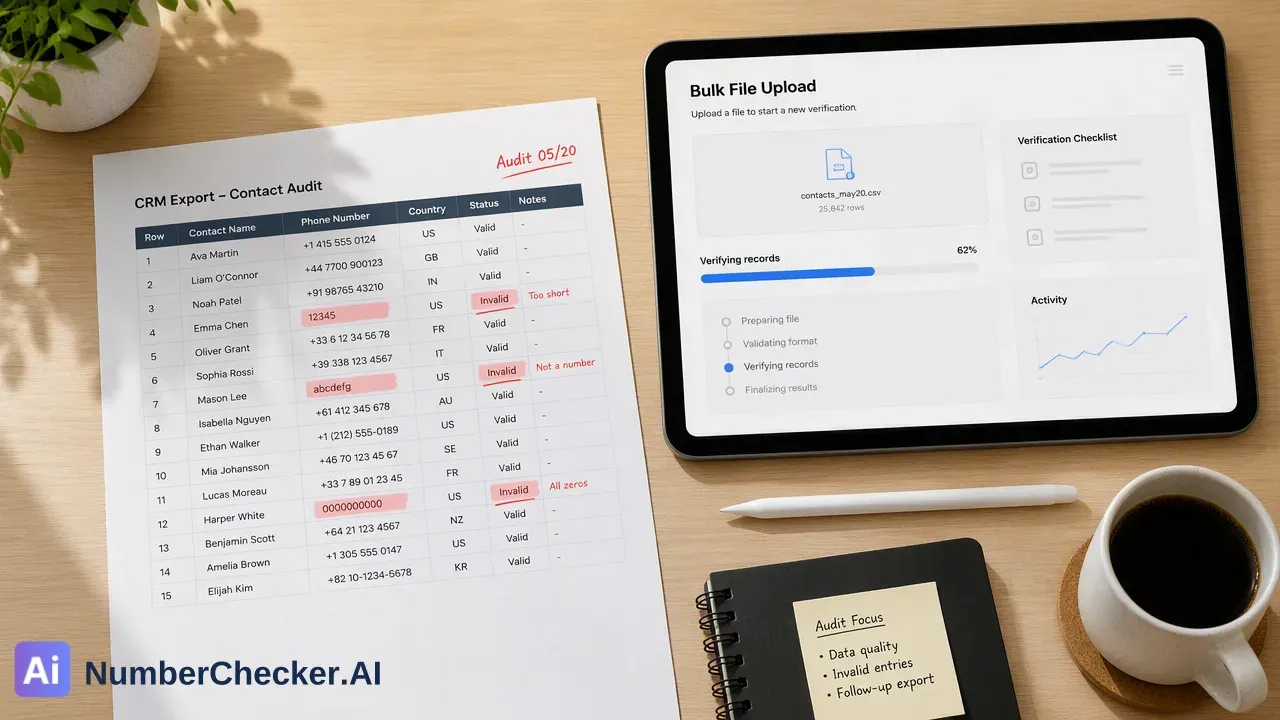
Outdated contact information and poor formatting are the primary culprits behind lower match rates. Over time, customers change phone numbers, abandon email addresses, or update their contact preferences. This natural decay means that a significant portion of a legacy CRM database may no longer point to valid communication channels. Furthermore, poorly formatted data—such as phone numbers lacking country codes, containing extraneous characters, or failing to meet standard normalization rules—hinders platforms from successfully linking records to user accounts. When marketing operations teams attempt to use this degraded data for audience matching, the advertising platform simply rejects the unreadable or mismatched identifiers. Addressing these common data quality issues requires a proactive approach to standardizing and validating contact information before it is exported for a campaign.
Systematic Approaches to List Cleaning
Data hygiene should be performed systematically before uploading lists to ad platforms to support higher accuracy. Relying on manual reviews or basic spreadsheet formatting is insufficient for large-scale CRM databases. Instead, organizations can implement bulk verification workflows to systematically evaluate the structural validity of their contact records. Bulk verification supports the efficient removal of unreachable or invalid contacts from the dataset. By filtering out these low-quality records, teams reduce wasted processing time and help provide the advertising platform with actionable identifiers. Additionally, incorporating platform-specific context is often more valuable than relying on raw contact lists for segmentation. Verifying whether a number is registered on relevant communication networks provides a deeper layer of data hygiene, which directly supports higher match rates when the refined list is finally uploaded.
Optimizing Your Workflow with Bulk Verification
NumberChecker.AI provides bulk verification tools designed to clean and segment contact lists for improved marketing performance. The core workflow involves the bulk checking of supported phone-number or email lists. To accommodate large-scale operations, these bulk workflows support CSV or TXT list uploads, as well as REST API access for programmatic integration. Marketing operations teams can export their raw CRM data, upload the CSV or TXT file through the bulk workflow, and receive a processed list that identifies invalid or improperly formatted records. Teams can then use these verification results to filter their databases and prepare cleaner, highly targeted segments for Instagram campaigns. By integrating this step into the standard campaign preparation process, organizations support their audience matching efforts with a foundation of verified data.
Frequently Asked Questions (FAQ)
Why is my Instagram audience match rate lower than expected?
Low match rates in social media advertising are often caused by outdated or poorly formatted CRM contact data rather than platform settings. When a CRM database accumulates stale data, the advertising platform cannot successfully link the provided phone numbers or emails to user accounts.
How does bulk verification improve ad campaign performance?
Bulk verification helps teams process large lists via CSV or TXT uploads to identify invalid records and platform-registered contacts. By removing unreachable or invalid records before the upload process, teams improve the accuracy of audience matching, which supports better segmentation and more efficient campaign targeting.
Should organizations clean CRM data before every ad upload?
Yes, data hygiene should be performed before uploading lists to ad platforms to support higher accuracy. Because contact information degrades over time as users change numbers or emails, running a bulk verification check prior to each major campaign upload helps maintain optimal match rates.
What is the difference between raw contact lists and verified segments?
Raw contact lists often contain unvalidated, outdated, or poorly formatted data that degrades targeting performance. Verified segments have undergone bulk checking to remove invalid identifiers, providing a refined dataset that supports more accurate audience matching and platform-specific segmentation.
Get Started with NumberChecker.AI
Explore NumberChecker.AI’s supported bulk list-checking products and choose the capability that fits your workflow.
Ready to get started?
Try our WhatsApp number validation service and see the difference clean data makes.

