Regulatory Risk and Your CRM: Why Platform-Specific Contact Data Requires Periodic Verification
Learn how regulatory shifts impact platform-linked CRM records and why periodic data hygiene audits support reliable contact workflows.
When major digital ecosystems face unexpected regulatory scrutiny or administrative changes, the downstream effects on enterprise CRM systems frequently surface as degraded contact reachability. Contact records tied to specific platform ecosystems are dynamic rather than permanent. Maintaining dependable customer communications requires treating platform-linked attributes as temporary conditions, using recurring data hygiene audits and bulk platform-signal verification to keep customer records aligned with current operational realities.
The Hidden Vulnerability of Platform-Linked Data
CRM databases frequently store phone numbers and email addresses alongside assumptions about channel availability. When enterprises map customer journeys across proprietary communication channels and third-party ecosystems, they expose their contact infrastructure to macro-level operational and regulatory shifts.
A clear illustration of platform vulnerability occurred when the Trump administration moved to suspend Microsoft from a specific green card program. While this administrative action concerned labor certification rather than consumer messaging, it underscored a fundamental lesson for operations leaders: even established technological cornerstones face sudden administrative interventions and shifting regulatory boundaries. When an external platform experiences administrative, compliance, or operational friction, the assumptions businesses maintain about platform access, developer APIs, or downstream user reachability can deteriorate quickly.
Organizations that treat platform-linked contact data as permanent assets overlook the dependency created by relying on third-party channels. If an account identifier lapses, if a platform updates its registration rules, or if enterprise access to platform features changes, contact lists predicated on unverified presence become liabilities.
Why Static Contact Records Become a Business Liability
Traditional database management often views phone numbers and email records as static rows created during initial user acquisition. In practice, contact identifiers represent shifting states. Phone lines are reassigned, corporate email accounts are decommissioned, and users migrate across messaging applications.
Neglecting ongoing data hygiene across these records introduces compounding operational friction:
- Wasted Outreach Bandwidth: Sending communications to numbers that no longer exist on a target platform consumes system budget and operational resources without delivering value.
- Degraded Infrastructure Standing: High volumes of failed attempts across messaging providers or telecommunications gateways can degrade sender metrics and trigger automated routing throttles.
- Obsolete Segmentation: Funneling contacts into automated communication workflows based on outdated platform-presence assumptions distorts pipeline reporting and campaign attribution.
Treating contact records as dynamic signals requires ongoing list inspection. A contact that was registered on a specific messaging network twelve months ago cannot be assumed to maintain that same registration profile today.
Auditing Contact Lists for Platform-Specific Registration Signals
To maintain reliable pipeline operations, technical and commercial teams require structured methods for checking existing lists against actual account presence. NumberChecker.AI operates as a bulk phone-number and email list checking service, supporting bulk list auditing through file uploads and asynchronous workflows.
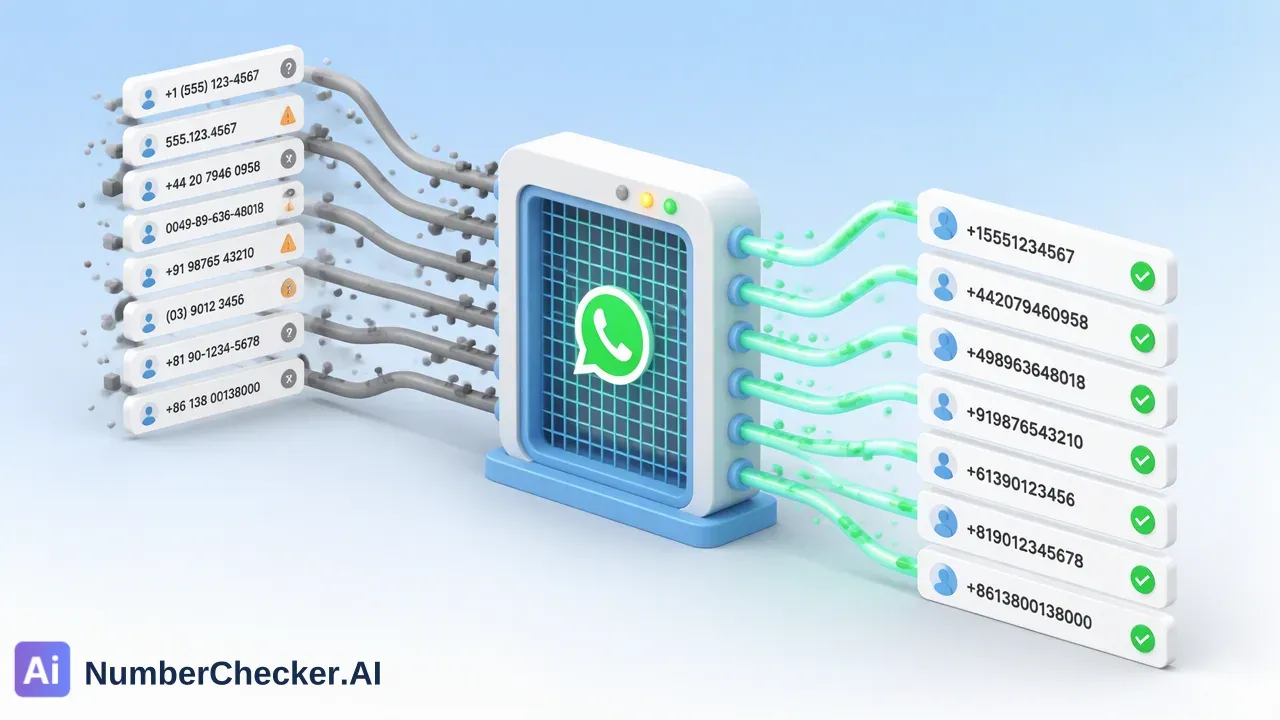
When evaluating phone datasets for specific platform channels, teams can submit CSV or TXT list uploads to audit current presence. For example, the WhatsApp Number Checker provides a registration signal confirming whether a given phone number has an active account registered on that platform at check time.
| Verification Stage | Operational Check | Workflow Value |
|---|---|---|
| Syntax & Syntax Cleansing | Syntax validation, E.164 normalization, duplicate removal | Eliminates unroutable entries prior to platform queries |
| Bulk Platform Signal Check | Platform account registration query (e.g., WhatsApp Number Checker) | Identifies current platform-level reachability context |
| CRM Record Updating | Segmentation tag adjustment based on check-time results | Informs internal routing and channel prioritization |
These platform-specific signals offer point-in-time reachability context.
Best Practices for Maintaining CRM Data Hygiene
Establishing durable data management protocols protects CRM data hygiene against sudden platform shifts and gradual list decay. Operations teams can maintain healthier contact repositories by implementing automated cleansing steps and standardized ingestion rules.
- Pre-Cleanse Raw Files Prior to Verification: Running preliminary checks via Number Cleaner normalizes phone numbers into standard E.164 formatting while removing redundant entries and malformed lines. Similarly, Email Cleaner checks syntax and MX records while filtering out disposable domains and duplicate rows.
- Follow Structural Formatting Requirements: For bulk phone verification, uploads should be organized with one country per file and one number per line including the country code, with the plus sign treated as optional.
- Isolate Channel Signals: Keep registration checks scoped to the target outreach channel. Verifying presence on one messaging platform does not establish reachability on an alternate network, nor does it replace explicit recipient consent.
- Audit on Defined Triggers: Establish automated data review checkpoints when contacts fail message delivery, re-verify records quarterly, and conduct a full list validation whenever underlying platform terms or API policies undergo notable shifts.
Systematic list hygiene helps operations teams make informed data routing choices, maintaining operational clarity across enterprise CRM databases.
Frequently Asked Questions (FAQ)
How often should teams audit CRM records for platform-specific reachability?
Review schedules depend on database churn and campaign frequency, but teams commonly run bulk verification cycles ahead of major campaigns or on a recurring quarterly schedule to catch dormant entries, decommissioned numbers, and shifted platform presence.
Does a platform registration signal confirm that a recipient will engage?
No. A platform registration signal is a point-in-time check confirming account presence on that specific service.
How does format normalization differ from platform registration checking?
Format normalization adjusts phone numbers into standard formats like E.164 and strips syntax errors or duplicates. Platform registration checking evaluates whether a formatted identifier is associated with an account on a specific platform at the time of the query.
Get Started with NumberChecker.AI
Explore NumberChecker.AI’s supported bulk list-checking products and choose the capability that fits your workflow.
Ready to get started?
Try our WhatsApp number validation service and see the difference clean data makes.

