Beyond the CRM: How to Prepare Your Contact Lists for Social Media Audience Targeting
Learn how to achieve customer data readiness for social media marketing by using bulk platform-registration checks to refine your CRM lists.
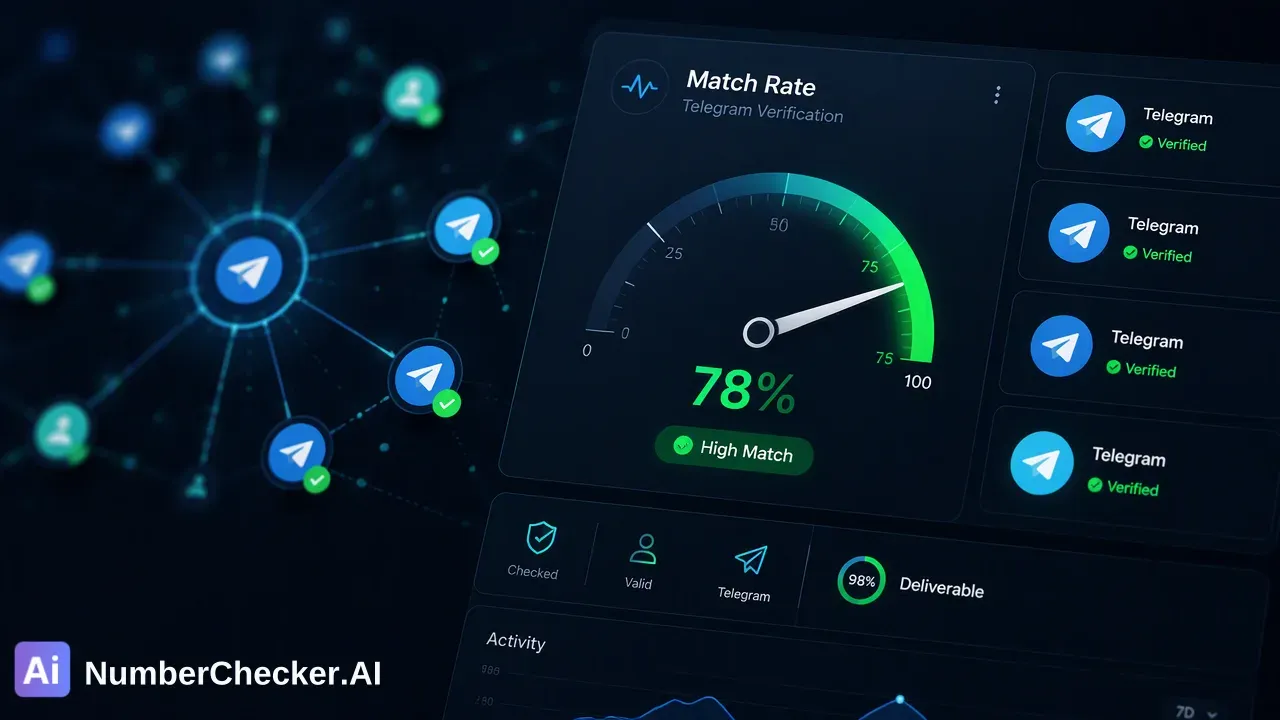
Achieving customer data readiness for social media marketing requires organizations to move beyond standard contact management and basic list hygiene. CRM data is often complete for general business operations but lacks the platform-specific signals required for effective social media audience targeting. To bridge this gap, marketing teams should integrate bulk platform-registration checks into their data preparation routines. This process identifies which phone numbers or emails are associated with an account on a specific platform at the time of the check. By confirming platform account presence before launching campaigns, organizations can refine their contact lists, filter out numbers that are not registered on the target network, and focus their resources on audiences that actually exist on the chosen social media platform. This systematic approach transforms raw CRM exports into actionable, platform-ready data.
The CRM Data Gap in Social Media Marketing
CRM systems excel at storing historical interactions, billing details, and standard contact information. However, CRM records often contain identifiers like phone numbers that are not verified for specific social media platform presence. A phone number might be perfectly valid for a traditional voice call, properly formatted according to E.164 standards, and actively used for SMS, but still be completely disconnected from a WhatsApp, Telegram, or Viber account. When marketing teams export these raw lists directly into social media advertising tools, they often encounter low match rates and inefficient workflows. The gap exists because standard CRM hygiene focuses on formatting, deduplication, and general phone validity, not on verifying whether a contact maintains an account on a specific third-party network. Without a dedicated check for account presence, organizations risk uploading thousands of records that the social media platform cannot match to an existing user. This discrepancy highlights why standard CRM maintenance, while necessary for general operations, falls short of providing the specific data points required for modern social media audience targeting.
Defining Data Readiness for Social Media
Data readiness is workflow-specific; a record can be ‘complete’ for sales but ‘unprepared’ for social media advertising. For a sales representative or a customer support agent, a correctly formatted phone number and an accurate name constitute a ready record. They can pick up the phone and initiate a voice call. For a social media marketer, that same record is incomplete without a platform-registration signal confirming the user’s presence on the target network. Marketing teams must evaluate their data against the specific requirements of their planned campaigns. If an organization intends to run a campaign on Telegram, the data is only ready when the list has been checked against Telegram’s registration network. If the campaign is focused on WhatsApp, the data must be validated for WhatsApp account presence. This distinction helps organizations understand that data quality is not an absolute state. It is a measure of how well the data supports a specific operational workflow. Recognizing this distinction allows teams to allocate resources efficiently, applying platform-specific checks only to the portions of their CRM that are intended for social media outreach.
The Role of Platform-Specific Registration Signals
Platform-specific registration signals are the missing link between raw contact lists and high-conversion audiences. A platform-registration signal is a data point confirming the existence of an account associated with a specific phone number or email on a given social media platform at the time of the check. Different products expose different high-level capabilities to support this process. For example, the WhatsApp Age & Gender Checker provides a platform registration signal alongside available profile and demographic enrichment. Similarly, the Telegram Age & Gender Checker and the Viber Avatar, Age, Gender & Others Checker confirm account presence while offering available profile, demographic, and activity enrichment. It is critical to understand the boundaries of these signals. It simply provides a factual input about account presence. This signal helps teams review their lists and makes it possible to filter out numbers that are not registered on the target platform, thereby acting as a vital decision-support tool for audience building.
Implementing a Systematic Verification Workflow
To achieve customer data readiness for social media marketing, organizations need a structured approach to data validation. Marketing teams should define the specific platform workflow before assessing data gaps. Once the target platform is identified, teams can utilize the core workflow of bulk checking for supported phone-number or email lists. Bulk workflows support CSV or TXT list uploads and REST API access, allowing organizations to process large CRM exports efficiently. During this process, enrichment should focus on missing decision inputs rather than just adding more fields to a record. For instance, if the goal is to build a Viber audience, the team should process their CSV export through the Viber checker to obtain the platform-registration signal and any relevant demographic enrichment. By checking lists against the specific platform, teams can systematically filter out numbers that lack a registered account. This workflow ensures that the final list uploaded to the social media platform consists only of contacts with a confirmed platform-registration signal. Integrating this step between the CRM export and the social media platform upload provides a clear, actionable method for improving data readiness and supporting more accurate audience targeting.
Frequently Asked Questions (FAQ)
Why is CRM data often insufficient for social media targeting?
CRM records often contain identifiers like phone numbers that are not verified for specific social media platform presence. While the data may be complete for general business operations and traditional voice calls, it lacks the specific account-presence signals required to build accurate social media audiences.
What is a platform-registration signal?
A platform-registration signal is a data point confirming the existence of an account associated with a specific phone number or email on a given social media platform at the time of the check.
How do marketing teams process large contact lists for platform presence?
Organizations can use bulk checking of supported phone-number or email lists to verify account presence at scale. Bulk workflows support CSV or TXT list uploads and REST API access, allowing teams to process extensive CRM exports and filter their data before utilizing it in social media campaigns.
Get Started with NumberChecker.AI
Explore NumberChecker.AI’s supported bulk list-checking products and choose the capability that fits your workflow.
Ready to get started?
Try our WhatsApp number validation service and see the difference clean data makes.

