Optimizing CRM Data Hygiene with Bulk Contact Verification
Learn how a CRM contact verification workflow using NumberChecker.AI supports data hygiene and audience segmentation through bulk list processing.
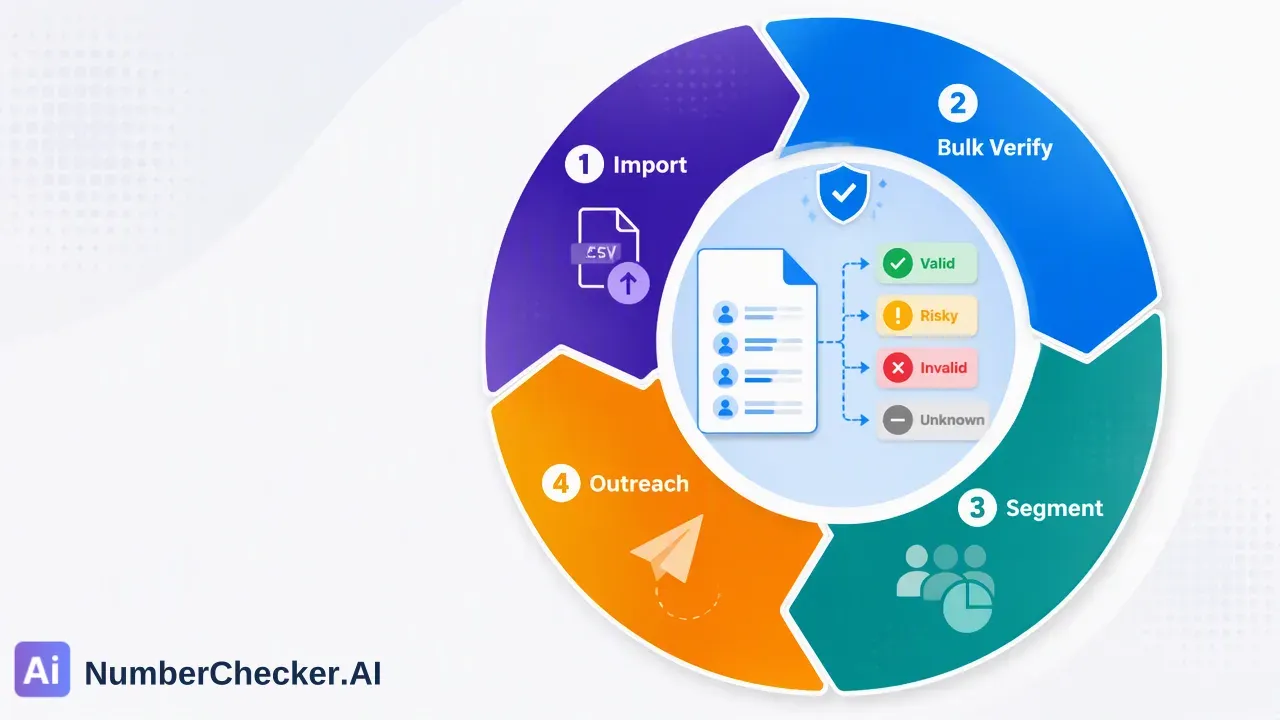
Maintaining a clean CRM requires consistent bulk verification of contact lists. By integrating a CRM contact verification workflow using NumberChecker.AI, teams can process CSV, TXT, or API-based lists to identify platform-registration signals. These signals help organizations segment audiences based on platform support—such as iMessage or RCS—supporting more precise outreach planning and improved data hygiene.
The Role of Data Hygiene in CRM Operations
Contact data degrades over time, making routine list maintenance a necessary component of CRM management. Data hygiene supports better outreach planning by helping teams maintain accurate context about the phone numbers and email addresses in their database. Instead of treating all records identically, organizations can use bulk contact verification to append platform-registration signals to each entry. When CRM records lack platform context, teams may struggle to optimize their communication channels. By identifying which numbers are registered on specific platforms, organizations can group contacts into distinct segments. This process informs internal decisions and helps teams review which channels are supported by the contacts in their system. A well-maintained CRM relies on these structured data points to support targeted audience planning and reduce the friction associated with unverified contact lists.
Bulk Verification Workflows
The core workflow of NumberChecker.AI is the bulk checking of supported phone-number or email lists. Rather than performing single-record lookups manually, teams can integrate bulk workflows that support CSV or TXT list uploads. For automated CRM environments, REST API access provides a programmatic way to submit lists for processing. This bulk approach is designed to handle large volumes of contact data, making it practical for organizations to verify records upon entry and periodically during routine database maintenance. When a list is processed, the workflow returns specific platform-registration signals that can be mapped directly to custom fields within the CRM. For example, a marketing operations team can upload a TXT file of newly acquired leads, process the batch through NumberChecker.AI, and update the CRM records with the resulting platform tags before initiating any outreach campaigns.
Applying Platform-Specific Signals
Different verification products expose distinct high-level capabilities, providing specific data points for audience segmentation. A capability must not be transferred from one product to another. Teams can apply the following platform-specific checks to inform their CRM segmentation:
- iMessage Checker: Identifies iMessage-registered numbers in bulk. This supports iOS and Apple ecosystem audience segmentation, giving teams context for iMessage-focused outreach or support planning. By tagging these records, teams can tailor their communication strategies for the iOS ecosystem.
- RCS Checker: Identifies phone numbers that support RCS or Google Messages. This signal contributes to rich-messaging audience planning by highlighting which contacts can receive advanced messaging formats.
- Gmail Avatar Checker: Checks whether email addresses are Gmail accounts and retrieves available avatar data. This provides contact intelligence that can be one input alongside other checks when reviewing email records.
Integrating Verification into CRM Cycles
A structured CRM contact verification workflow involves checking records at multiple stages of the data lifecycle. Organizations typically trigger bulk verification when new lists are imported and schedule periodic checks for existing records to maintain list health. By using REST API access or routine CSV uploads, teams can systematically tag CRM profiles with their corresponding platform-registration signals. For instance, an integration might automatically send a daily batch of new sign-ups to the API, retrieving platform signals and updating the CRM profiles before they are assigned to specific outreach tracks. Additionally, running quarterly bulk checks on older CRM segments helps identify changes in platform registration, helping audience segmentation remain accurate over time. This ongoing integration helps teams maintain cleaner segmentation and supports more informed outreach strategies.
Frequently Asked Questions (FAQ)
How does bulk verification differ from single-number lookup?
NumberChecker.AI is designed for bulk list checking rather than single-record lookups. The core workflow involves processing large volumes of phone numbers or email addresses via CSV, TXT, or REST API access to append platform-registration signals across an entire database.
What file formats are supported for bulk list processing?
Bulk workflows in NumberChecker.AI support CSV and TXT list uploads, alongside REST API access for programmatic integration.
Can capabilities be combined across different platform checkers?
Different products expose different high-level capabilities, and a capability must not be transferred from one product to another. For example, the iMessage Checker is scoped specifically to iOS ecosystem segmentation, while the RCS Checker is scoped to rich-messaging capability signals.
Get Started with NumberChecker.AI
Explore NumberChecker.AI’s supported bulk list-checking products and choose the capability that fits your workflow.
Ready to get started?
Try our WhatsApp number validation service and see the difference clean data makes.

