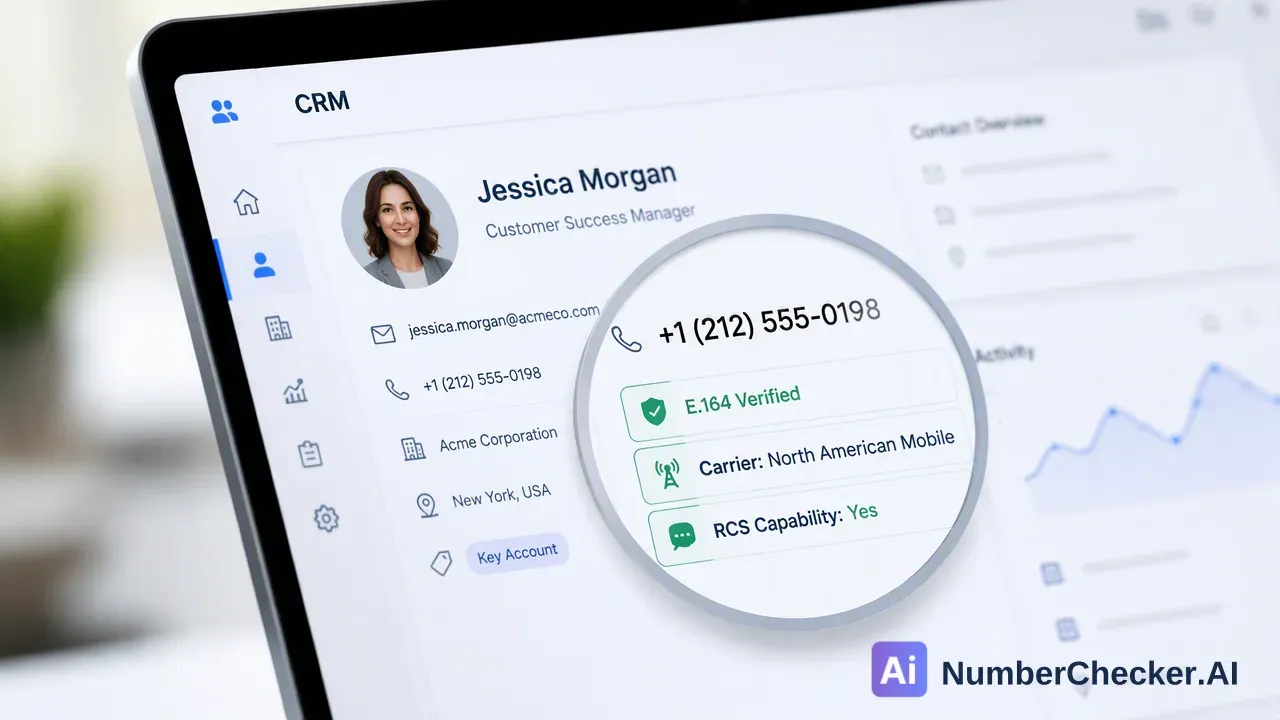
The CRM Contact Data Hygiene Checklist: A Systematic Approach
A practical checklist for CRM teams to maintain contact data hygiene using bulk list checking, carrier intelligence, and platform-registration signals.
Maintaining CRM data hygiene requires a recurring, systematic approach that moves beyond manual entry. By implementing a checklist that includes standardized normalization, bulk checking of phone and email lists, and the integration of carrier and platform-registration signals, teams can support better audience segmentation and keep their contact records organized for ongoing operations. A structured hygiene process helps organizations manage large datasets efficiently, providing CRM managers and data operations teams with the context needed to maintain high-quality contact profiles.
1. Standardize and Normalize Entry
The foundation of contact data hygiene begins at the point of entry. CRM teams must implement consistent formatting for all incoming contact data to support system compatibility and downstream processing. Normalizing phone numbers—such as applying the E.164 international format—and standardizing email addresses helps organizations maintain a uniform database. This initial standardization step prepares the data for more advanced bulk checking workflows. When records follow a predictable structure, technical teams can more easily route them through automated systems. Establishing strict normalization rules upon data ingestion reduces the friction associated with misaligned fields and ensures that subsequent carrier and platform-registration checks operate on cleanly formatted inputs.
2. Execute Recurring Bulk Checking Workflows
Once data is normalized, the next step in the hygiene checklist is processing the records at scale. The core workflow for maintaining large CRM databases is the bulk checking of supported phone-number or email lists. Teams can execute these bulk workflows by utilizing CSV or TXT list uploads for periodic, manual audits of legacy data. Alternatively, data operations teams can utilize REST API access to integrate these checks directly into their automated CRM maintenance cycles. Processing records in bulk helps organizations efficiently audit their existing lists, supporting regular maintenance without relying on manual, one-by-one reviews. By establishing a recurring schedule for bulk list checking, organizations can systematically flag records that require review or updating.
3. Enrich Records with Carrier Intelligence
Beyond basic list checking, CRM teams can enrich their contact records by integrating carrier intelligence. This capability is distinct from platform registration and activity signals. Using tools like the Global Carrier Checker, organizations can identify the carrier, line type, country, and regional context for phone numbers across supported countries. For North American data, the Advanced US Carrier Checker provides carrier, line type, and regional context specifically for United States and Canada phone numbers. Adding this carrier intelligence and location signal to CRM profiles helps teams improve audience segmentation. For example, distinguishing between different line types or grouping contacts by regional context informs how CRM managers structure their regional planning and organize their database segments.
4. Integrate Platform-Specific Signals
The final step in the hygiene checklist involves tagging records with platform-specific presence indicators. For example, teams can use the RCS Checker to identify phone numbers that support RCS or Google Messages. This provides a platform-registration signal and rich-messaging capability signal that informs audience planning for rich-messaging initiatives. A platform-registration signal confirms account-related presence for the named platform at the time of the check. It serves as one input alongside other checks to help CRM managers organize their outreach strategies based on documented platform support.
5. Consolidate and De-duplicate Records
A comprehensive contact data hygiene checklist must also address record duplication. After normalizing inputs, executing bulk checks, and appending carrier or platform signals, CRM teams often uncover duplicate entries that share the same underlying contact details. Consolidating these duplicate records ensures that each individual is represented by a single, enriched profile within the CRM. Technical leads can use the standardized formats and newly appended intelligence tags to confidently merge overlapping records. This de-duplication process streamlines database management, reduces storage clutter, and provides a clearer view of the organization’s contact list for future audience segmentation efforts.
Frequently Asked Questions (FAQ)
How often should CRM contact data be audited?
CRM contact data should be audited on a recurring basis. Implementing regular bulk checking of supported phone-number or email lists helps teams maintain organized records and supports ongoing audience segmentation.
What is the difference between carrier intelligence and platform registration signals?
Carrier intelligence identifies the carrier, line type, country, and regional context for a phone number. In contrast, a platform-registration signal confirms account-related presence for a specific service, such as identifying phone numbers that support RCS or Google Messages for rich-messaging audience planning. Carrier intelligence is distinct from platform registration and activity signals.
Can bulk checking be automated within a CRM workflow?
Yes, bulk workflows support CSV or TXT list uploads and REST API access, allowing technical teams to integrate bulk checking of phone-number or email lists directly into their CRM maintenance processes.
What inputs are required for carrier intelligence checks?
Carrier intelligence checks, such as those performed by the Global Carrier Checker or the Advanced US Carrier Checker, require a phone number as the input to identify the associated carrier, line type, and regional context.
Does a platform-registration signal confirm that a user will read a message?
No. A platform-registration signal only confirms account-related presence for the named platform at the time of the check.
Get Started with NumberChecker.AI
Explore NumberChecker.AI’s supported bulk list-checking products and choose the capability that fits your workflow.
Ready to get started?
Try our WhatsApp number validation service and see the difference clean data makes.

