How to Build a Reliable Batch Calling Workflow for Appointment Reminders
Learn how to build a reliable batch calling workflow for appointment reminders using data hygiene, queue pacing, voicemail handling, and reporting loops.
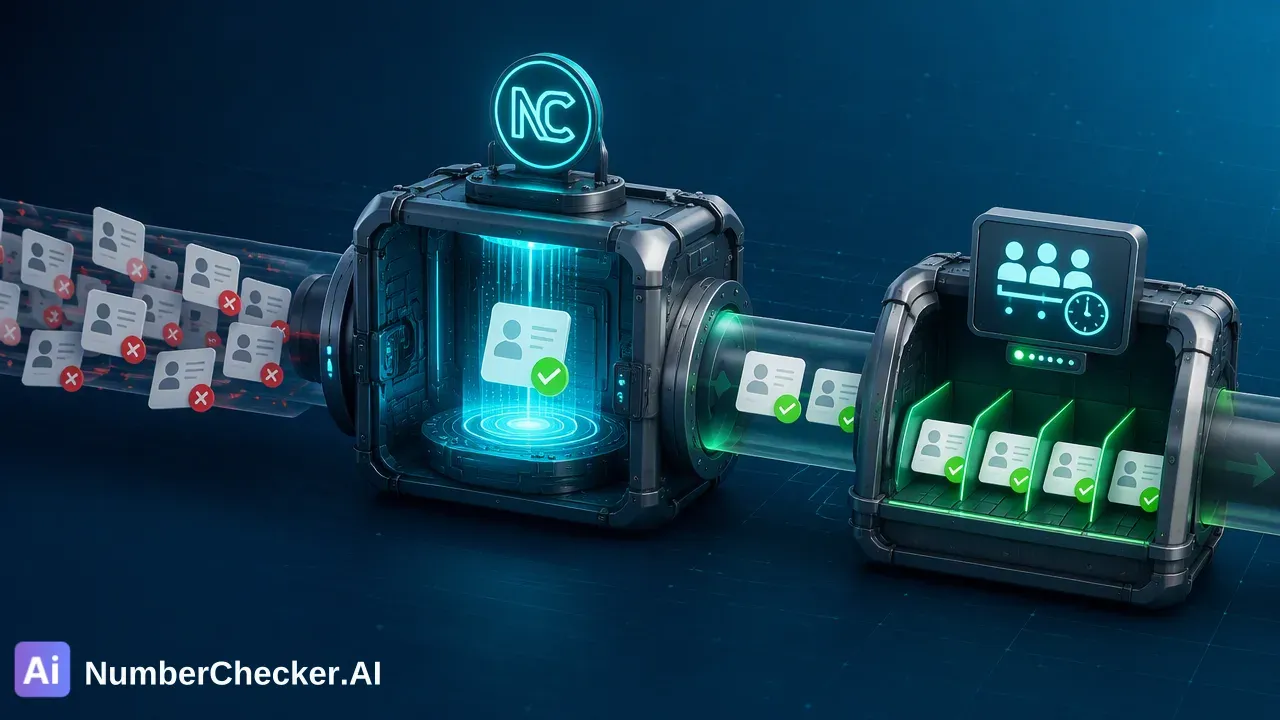
A reliable batch calling workflow for appointment reminders relies on four structural pillars: rigorous pre-call data hygiene to filter invalid numbers, paced queue management to prevent network congestion, adaptive handling for non-human responses such as voicemails, and signed reporting endpoints to securely record confirmation statuses. By validating contact lists before queuing calls, organizations reduce wasted connection attempts and help downstream systems focus telephony resources on reachable recipients.
The Foundation of Reliable Outreach: Data Hygiene
Every batch calling workflow depends on the quality of its underlying input list. Sending automated voice calls to unverified or stale records leads to high call failure rates, wasted trunk capacity, and distorted campaign reporting. Integrating pre-call data hygiene as an automated prerequisite helps organizations maintain high-intent outreach queues. Bulk verification allows teams to separate reachable contacts from invalid numbers before initiating outreach. With services like NumberChecker.AI, organizations can screen extensive lists using bulk CSV or TXT file uploads or embed automated list validation pipelines into their data stacks via REST API access. Utilizing phone number validation at this stage generates a validity signal that identifies invalid formats, unassigned blocks, or unusable entries. Implementing pre-call hygiene also preserves carrier reputation. Originating carriers monitor call completion ratios; dispatching large volumes of calls to non-working numbers can result in traffic throttling or negative call-labeling across telecommunication networks.
Managing Batch Queues and Network Load
Once contact lists are cleaned, the calling pipeline must handle outbound dispatches through a controlled queue. High-volume appointment reminder campaigns cannot dump thousands of records into an outbound dialer simultaneously without creating infrastructure bottlenecks. Structured queue management prevents network congestion and carrier throttling during batch outreach. Pacing calls involves controlling two primary variables: concurrency limits and call dispatch rates per second. Organizations should consult their voice provider’s technical documentation to align outbound volume with provisioned session capacity. Key strategies for queue design include:
- Segmented Time Windows: Distributing outreach across predictable customer-convenient windows based on recipient time zones to avoid out-of-hours dialing. * Adaptive Throttling: Automatically dialing back dispatch concurrency if provider webhooks report elevated error codes or carrier congestion. * Priority Lanes: Reserving dedicated capacity for time-sensitive appointment reminders occurring within 24 hours, separating them from general reminder batches.
Handling Non-Human Responses and Voicemails
Automated voice workflows regularly encounter non-human endpoints, such as answering machines, voicemail systems, and operator intercepts. A reliable batch calling architecture must distinguish between an interactive human recipient and an automated answering system to route call logic appropriately. Modern voice systems employ answering machine detection (AMD) signals to determine whether a pickup represents a live voice or an audio recording. Workflows should be tailored to handle each scenario distinctly:
- Live Recipient: The system initiates interactive voice response (IVR) prompts, allowing the patient or client to confirm, cancel, or reschedule the appointment using dual-tone multi-frequency (DTMF) keypresses or speech inputs. * Voicemail or Answering Machine: The system transitions from an interactive dialogue to a standardized audio message drop, leaving reminder details without prompting for real-time keypresses. * Unanswered or Busy Lines: The pipeline tags the record for downstream retry logic rather than treating it as a confirmed delivery failure. Clear classification of call completion states prevents automated workflows from recording false confirmations or dropping incomplete audio messages into voicemail boxes.
Securing Confirmation Endpoints with Request Signing
Appointment reminder systems interact directly with scheduling software, electronic health records (EHR), or customer relationship management (CRM) platforms. When a recipient confirms or reschedules an appointment during a call, the telephony platform issues an HTTP webhook to an internal confirmation endpoint. Securing these confirmation endpoints is necessary to protect scheduling integrity. Because webhooks traverse the public internet, endpoints must implement request signing to prevent forgery or tampering. A robust architecture enforces the following practices:
- Cryptographic Signatures: The voice provider generates an HMAC hash using a shared secret and appends it to webhook request headers. * Timestamp Validation: Endpoints inspect the request timestamp to protect against replay attacks where an attacker captures and retransmits legitimate confirmation requests. * Strict Payload Parsing: Callback handlers parse expected confirmation fields and status codes before updating core scheduling databases. Enforcing signature verification ensures that only authenticated telephony events alter appointment records.
Structuring the Reporting Loop for Outreach Optimization
The final stage of an automated batch calling workflow is a structured reporting loop that aggregates dispatch outcomes, operational errors, and recipient responses into unified records. To maintain long-term workflow efficiency, teams should categorize outreach outcomes into explicit operational buckets:
| Outcome Category | Operational Definition | Next Action |
|---|---|---|
| Confirmed | Recipient completed interactive confirmation prompt | Mark appointment verified in CRM/EHR |
| Reschedule Requested | Recipient indicated rescheduling requirement | Route to scheduling queue or SMS self-service |
| Voicemail Left | Answering machine detected; audio drop completed | Monitor for inbound confirmation or followup |
| Unreachable / Network Error | Carrier-level failure or repeated busy signal | Flag for manual outreach or alternate contact channel |
| Pre-Call Invalid | Screened out during pre-call validity check | Retain record in hygiene log; prompt client for updated details |
| Data collected across each batch cycle informs list hygiene routines and scheduling rules. By systematically comparing confirmed vs. unreached contacts, operations teams can identify recurring delivery friction, optimize dispatch times, and maintain dependable appointment reminder operations. |
Frequently Asked Questions (FAQ)
Why is data hygiene important before starting a batch calling workflow?
Data hygiene removes invalid, malformed, or disconnected numbers from the dispatch queue before calls are initiated. Starting with a validated list reduces telephony overhead, minimizes failed connection attempts, and helps operations teams maintain accurate reachability metrics.
How does bulk verification improve appointment reminder efficiency?
Bulk verification allows organizations to screen large contact lists using CSV or TXT uploads or REST API integrations. By confirming basic phone-number validity ahead of time, teams avoid dedicating active outbound trunk capacity to numbers that cannot receive calls.
What role does queue management play in large-scale outreach?
Queue management regulates the concurrency and dispatch rate of outbound calls. Without structured pacing, sudden spikes in outbound volume can overwhelm carrier interconnects, trigger downstream rate controls, or degrade audio quality across active sessions.
How can teams secure automated confirmation endpoints against forgery?
Teams should require cryptographic signatures on webhooks or confirmation callbacks sent by telephony providers. Verifying request signatures with a shared secret or public key prevents malicious actors from spoofing appointment confirmations or manipulating scheduling state.
Get Started with NumberChecker.AI
Explore NumberChecker.AI’s supported bulk list-checking products and choose the capability that fits your workflow.
Ready to get started?
Try our WhatsApp number validation service and see the difference clean data makes.

