B2B Lead Prioritization & Registration Signal API
Learn how to use NumberChecker.AI bulk CSV/TXT uploads and REST API to identify platform registration signals for CRM data hygiene and lead prioritization.
NumberChecker.AI supports B2B marketing managers and CRM administrators in maintaining data hygiene by processing bulk phone-number lists via CSV or TXT uploads and REST API integration. By utilizing an automated phone number audience value and registration signal API, organizations can identify platform registration signals to inform lead prioritization. These workflows provide decision-support data, helping teams segment contacts based on their account presence on specific platforms without relying on manual verification.
The Role of Data Hygiene in B2B Lead Management
Maintaining accurate CRM data is a foundational requirement for efficient lead prioritization and resource allocation. Over time, B2B contact lists accumulate outdated or unverified phone numbers, complicating outreach workflows and obscuring high-value audience segments. CRM administrators face the ongoing challenge of categorizing large datasets to support sales operations professionals. Integrating an automated phone number audience value and registration signal API into data management practices helps teams review and segment these lists systematically. Instead of treating all phone numbers as equal, organizations can use platform registration signals as one input alongside other checks to inform internal decisions. This approach supports more structured data hygiene, ensuring that marketing and sales teams have additional context when planning their outreach strategies. By relying on automated bulk checking rather than manual review, businesses can process extensive lead lists efficiently, keeping CRM records updated with relevant account presence indicators.
Automating List Processing with NumberChecker.AI
NumberChecker.AI is designed specifically for bulk checking of supported phone-number or email lists, rather than single-number lookups. This bulk-first architecture supports organizations that need to process large volumes of CRM data efficiently. Teams can access these workflows through two primary methods: direct file uploads or REST API integration. For manual list processing, CRM administrators can upload CSV or TXT files directly into the system. This method is highly effective for periodic data hygiene audits or one-off lead list reviews. For automated, programmatic workflows, developers can integrate the NumberChecker.AI REST API. To maintain strict adherence to the documented architecture, integrations must use the POST /api/v1/check endpoint. Requests require authentication via the X-API-Key header and must specify the desired checker using the service_type body field. By standardizing on this single endpoint and utilizing the service_type parameter, organizations can route bulk lists to the appropriate checking service without managing multiple API paths. This automated phone number audience value and registration signal API workflow helps sales operations teams maintain continuous data hygiene by programmatically checking new leads as they enter the CRM.
Understanding Platform Registration Signals
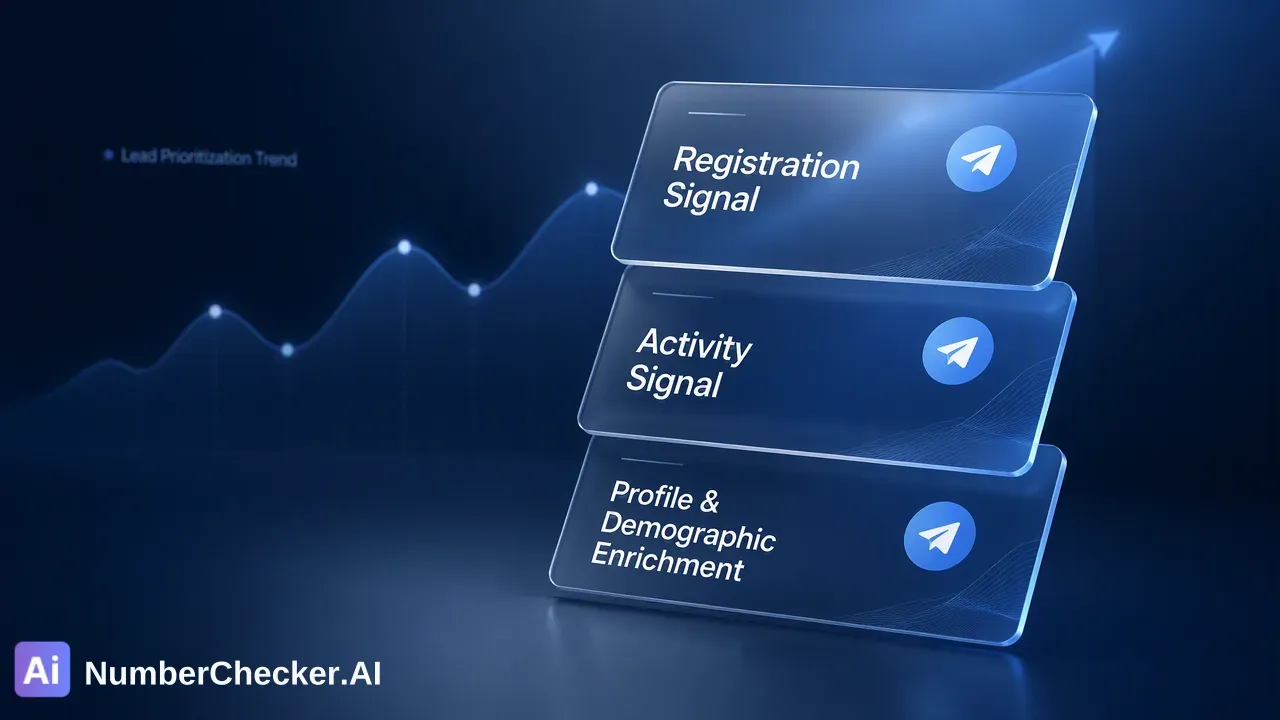
A platform registration signal is a data point indicating whether a specific phone number is associated with an account on a designated platform. NumberChecker.AI provides several distinct checkers for Telegram, each exposing different high-level capabilities. It is critical to understand that a capability must not be transferred from one product to another; teams must specify the correct service_type for the data they require. The standard Telegram Checker focuses on core account presence. It checks Telegram registration and provides available username and Premium-membership context. Its specific capabilities include a platform registration signal, an account identifier signal, and a membership signal. The Telegram Days Checker expands on this by checking Telegram account presence and providing available activity or last-seen context, alongside the username, account identifier, and Premium-membership context. This adds an activity signal to the baseline capabilities. For the most comprehensive data, the Telegram Avatar, Age, Gender & Others Checker checks Telegram account presence and provides available profile, demographic, and activity enrichment. Its capabilities encompass a platform registration signal, an activity signal, profile enrichment, demographic enrichment, and a membership signal. By understanding these distinct capability labels, CRM administrators can select the exact level of enrichment required for their specific lead prioritization workflows, ensuring they only process the data necessary for their segmentation strategies.
Integrating Signals into CRM Workflows
Once platform registration signals and associated enrichment data are retrieved via CSV, TXT, or the REST API, they serve as valuable decision-support data for customer-defined review. Sales operations professionals can map these signals to custom fields within their CRM, creating new dimensions for lead segmentation. For example, a basic platform registration signal helps teams identify which contacts have an account presence on Telegram. If a workflow utilizes the Telegram Days Checker, the resulting activity signal can inform prioritization by highlighting accounts with recent platform interaction. Furthermore, profile enrichment and demographic enrichment from the advanced checker can contribute to more tailored audience segmentation. It is important to establish clear operational boundaries when interpreting this data. Instead, they act as contextual inputs that support internal routing, branching, and prioritization decisions. By incorporating an automated phone number audience value and registration signal API into their broader data hygiene strategy, B2B organizations can allocate their outreach resources more effectively based on platform account presence.
Frequently Asked Questions (FAQ)
How does bulk checking differ from single-number lookups?
NumberChecker.AI is built specifically for bulk checking of supported phone-number or email lists. Instead of processing contacts one by one, organizations can evaluate entire CRM datasets simultaneously using CSV or TXT file uploads, or programmatically via the REST API.
What file formats are supported for bulk list uploads?
For manual bulk workflows, NumberChecker.AI supports list uploads in CSV or TXT formats. These formats allow CRM administrators to export large lead lists from their databases, process them for platform registration signals, and re-import the appended data.
How do developers integrate the REST API for automated checking?
Developers can automate list processing by integrating the NumberChecker.AI REST API. All requests must be directed to the POST /api/v1/check endpoint, authenticated using the X-API-Key header, and must include the service_type body field to specify which checker to use.
Do all Telegram checkers provide profile enrichment?
No. Different products expose different high-level capabilities, and capabilities must not be transferred between them. The standard Telegram Checker provides a platform registration signal, account identifier signal, and membership signal. Profile enrichment and demographic enrichment are exclusively available through the Telegram Avatar, Age, Gender & Others Checker.
Get Started with NumberChecker.AI
Explore NumberChecker.AI’s supported bulk list-checking products and choose the capability that fits your workflow.
Ready to get started?
Try our WhatsApp number validation service and see the difference clean data makes.

