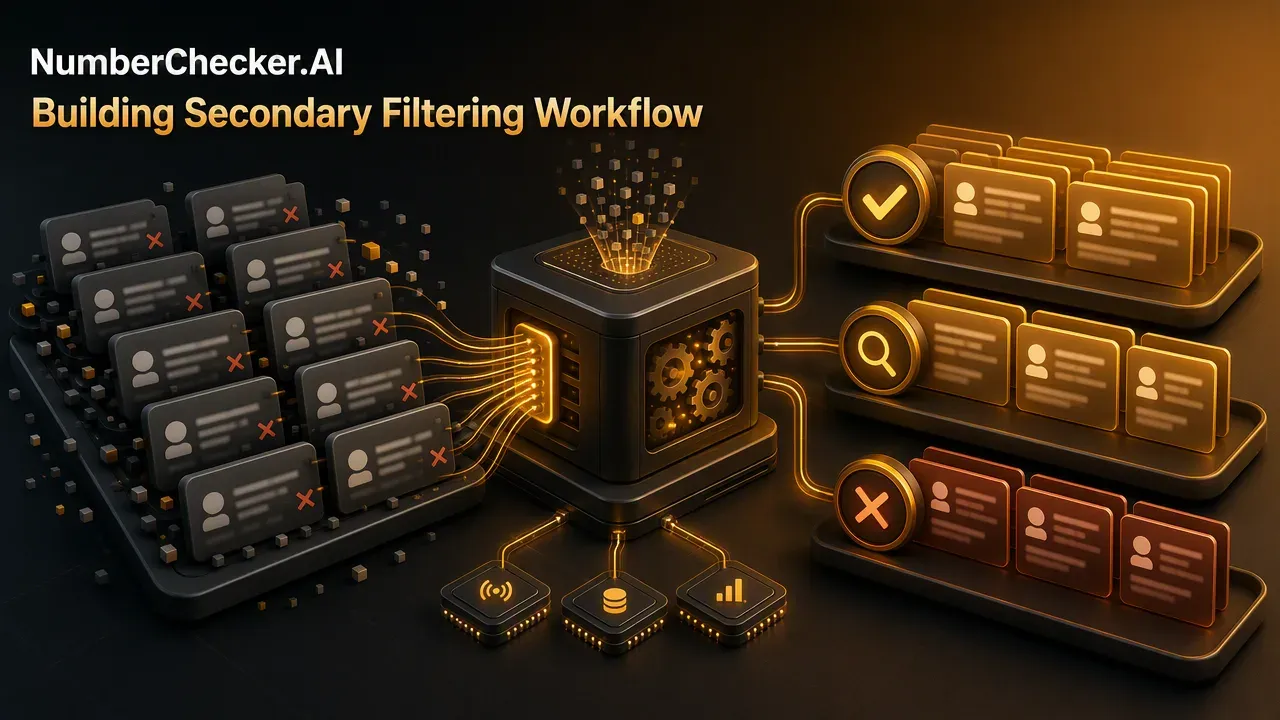
Building a Secondary Filtering Workflow for Ad-Generated Leads
Learn how to build an ad lead data cleaning workflow using bulk verification, carrier intelligence, and iMessage signals to support CRM segmentation.
A secondary filtering workflow for ad-generated leads involves processing raw contact lists through bulk verification tools before they enter a customer relationship management (CRM) system or outreach pipeline. Because initial ad captures often contain unformatted or irrelevant contact data, a dedicated ad lead data cleaning workflow helps teams review and segment these entries. By applying platform-specific checks—such as iMessage registration signals—and carrier intelligence, organizations can segment their audience based on device ecosystems or regional context. This secondary layer of data processing supports more targeted outreach planning and informs internal decisions about which leads warrant additional follow-up.
The Challenge of Raw Ad-Generated Leads
Ad campaigns frequently generate high volumes of contact data, but raw lead lists often contain unreachable, improperly formatted, or invalid phone numbers. When these unverified lists are ingested directly into a CRM, they can clutter databases, complicate outreach efforts, and consume valuable administrative time. Implementing a secondary filtering workflow introduces a dedicated step between lead capture and CRM ingestion. This ad lead data cleaning workflow processes the raw data in bulk to identify line types, regional context, and platform presence. By filtering the data before it reaches the sales or support teams, organizations can prioritize their outreach efforts more effectively. A structured bulk checking process helps teams review the contact data, supporting better resource allocation and informing downstream communication strategies without requiring manual inspection of every individual lead.
Designing Your Bulk Verification Workflow
Building an effective ad lead data cleaning workflow requires integrating bulk verification tools into your existing data architecture. The core workflow of NumberChecker.AI focuses on the bulk checking of supported phone-number or email lists, rather than single-number lookups. Organizations can implement this process through two primary methods, depending on their technical resources and automation requirements. For manual or batch-based operations, bulk workflows support CSV or TXT list uploads directly through a dashboard interface. This approach is highly useful for periodic list cleaning, auditing historical ad campaign data, or managing one-off lead purchases. For continuous, automated pipelines, REST API access allows developers to integrate the verification step directly into the lead routing system. When a new batch of leads is generated from an ad campaign, the system can programmatically submit the data for bulk checking. This dual approach ensures that both technical and non-technical teams can manage the secondary filtering process, applying the necessary checks before the data is passed to the next stage of the pipeline.
Selecting the Right Signals for Your Pipeline
A robust ad lead data cleaning workflow relies on selecting the appropriate verification signals for your specific outreach goals. Different products expose different high-level capabilities, and it is important to apply the right check to the right segment of your list. Carrier intelligence provides foundational context for phone numbers. The Global Carrier Checker identifies the carrier, line type, country, and regional context for phone numbers across supported countries. For North American campaigns, the Advanced US Carrier Checker provides similar carrier, line type, and regional context specifically for United States and Canada phone numbers. This information helps teams review whether a number is a mobile line suitable for SMS or a landline that requires a voice call. Platform registration signals offer a different layer of context. The iMessage Checker identifies iMessage-registered numbers in bulk. This specific signal is used for iOS/Apple ecosystem audience segmentation and iMessage outreach or support planning. By distinguishing between general carrier data and platform-specific presence, organizations can tailor their communication channels to match the recipient’s device ecosystem.
Integrating Results into CRM and Outreach
Once the bulk verification process is complete, the resulting data must be integrated back into the CRM or outreach platform to be useful. The output of an ad lead data cleaning workflow typically includes the original contact information appended with the newly requested signals, such as carrier type, regional context, or iMessage registration status. For teams using CSV or TXT list uploads, the filtered lists can be exported and manually mapped to corresponding CRM fields during the import process. In automated environments using REST API access, the pipeline can retrieve the results programmatically and update the lead records dynamically. This enriched data supports internal routing decisions and helps teams review the best approach for each contact. For example, leads identified as belonging to the iOS/Apple ecosystem can be routed to a specific iMessage outreach campaign, while numbers identified as landlines via carrier intelligence can be queued for traditional voice follow-up. By systematically applying these signals, organizations ensure their outreach planning is informed by structured, segmented contact data.
Frequently Asked Questions (FAQ)
How do I automate bulk verification for my lead pipeline?
You can automate bulk verification by utilizing REST API access to integrate the checking process directly into your data pipeline. When ad-generated leads are captured, your system can programmatically submit the contact lists for bulk checking. The API retrieves the verification signals, which can then be automatically appended to the lead records before they are ingested into your CRM.
What is the difference between carrier intelligence and platform registration signals?
Carrier intelligence identifies the underlying infrastructure of a phone number, such as the carrier, line type, country, and regional context. Platform registration signals, on the other hand, identify whether a number is registered with a specific service or application. For example, an iMessage registration signal confirms presence on that specific platform, which supports iOS/Apple ecosystem audience segmentation, whereas carrier intelligence informs general routing based on line type.
Can I use bulk verification to segment my audience by device type?
Yes, bulk verification can support device ecosystem segmentation by checking for platform-specific registration signals. For instance, using an iMessage Checker identifies iMessage-registered numbers in bulk. This specific signal helps teams segment their audience for the iOS/Apple ecosystem, which can be one input into broader iMessage outreach or support planning.
Get Started with NumberChecker.AI
Explore NumberChecker.AI’s supported bulk list-checking products and choose the capability that fits your workflow.
Ready to get started?
Try our WhatsApp number validation service and see the difference clean data makes.

