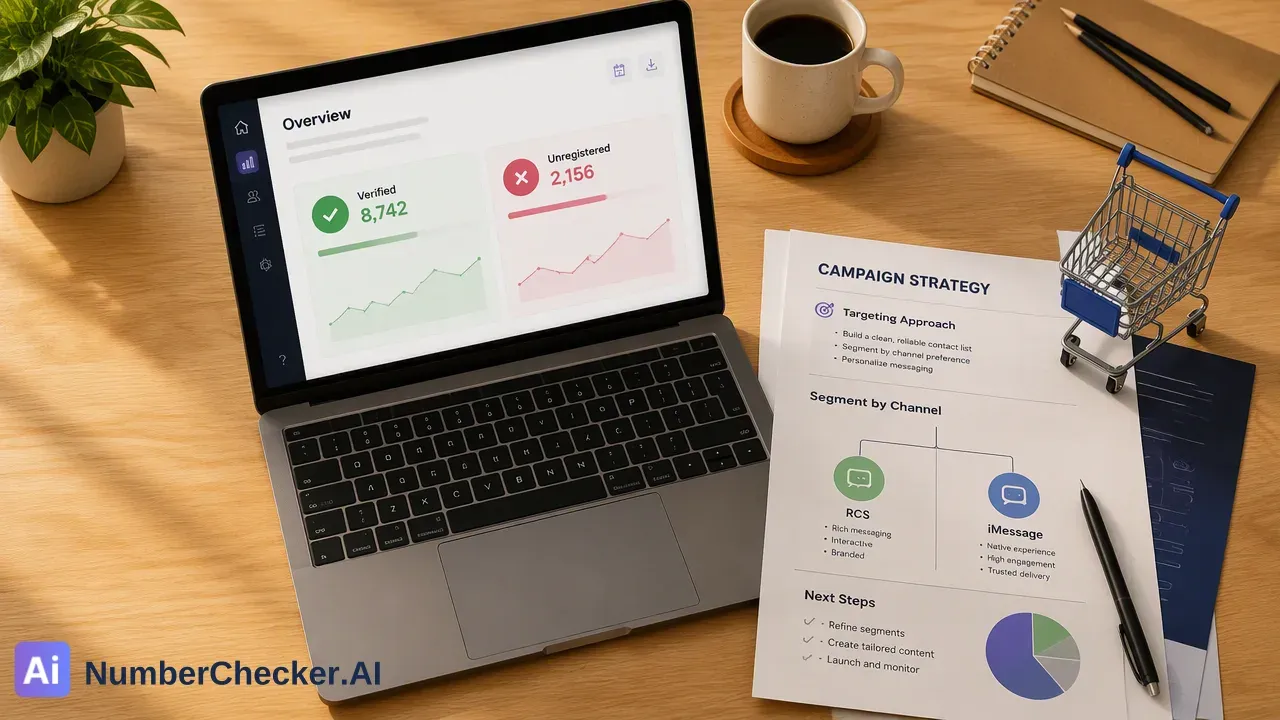
Optimizing Abandoned Cart Recovery With Pre-Send Verification
Learn how abandoned cart SMS list hygiene and pre-send verification help teams segment audiences and optimize messaging workflows.
Abandoned cart recovery is most effective when messaging is timely, personalized, and sent to verified contacts. Pre-send verification serves as a critical first step by identifying platform-registered numbers, helping teams segment audiences accurately and reduce wasted outreach. By integrating abandoned cart SMS list hygiene into the workflow, organizations can help route recovery efforts toward contacts with an account-related presence on specific messaging channels. This foundational check supports better campaign planning and helps teams respect user consent while delivering relevant reminders.
The Foundation of Effective Abandoned Cart Recovery
Effective abandoned cart recovery relies on timely, personalized SMS messaging that respects user consent. When a customer leaves items in their cart, sending a relevant reminder within a short window can support re-engagement. Personalization—such as referencing the specific product or cart value—adds context that helps teams connect with the recipient. Segmentation based on purchase history and cart behavior improves message relevance, but these strategies require a clean, accurate contact database. Abandoned cart SMS list hygiene is the foundational step for ensuring messaging relevance. Without verifying that a phone number is registered on a targeted platform, organizations risk sending campaigns to invalid or unregistered numbers. Maintaining list hygiene helps teams focus their resources on actionable contacts, supporting compliance requirements for SMS marketing and improving overall workflow efficiency. When combined with rigorous pre-send checks, personalized details can be routed more effectively to valid contacts.
Why Pre-Send Verification Matters
Pre-send verification helps organizations segment audiences based on platform-specific signals before launching a recovery campaign. Rather than treating every phone number identically, teams can use verification to confirm whether a number has an account-related presence on a specific messaging network. Identifying registered contacts supports more precise messaging strategies. For example, knowing that a segment of an audience is registered on a specific platform helps marketing teams tailor the format and timing of their outreach. When teams attempt to send rich media or interactive cart reminders to numbers that do not support them, the message may fail or render poorly. Pre-send verification mitigates this risk by providing the necessary context for routing. By filtering out numbers that lack the necessary platform registration, organizations can streamline their abandoned cart SMS list hygiene processes.
Leveraging Platform-Specific Signals for Segmentation
Platform-registration signals provide account-related presence data for specific messaging apps, which is highly valuable for audience segmentation. For instance, the iMessage Checker identifies iMessage-registered numbers in bulk. This capability supports iOS/Apple ecosystem audience segmentation and informs iMessage outreach or support planning. By isolating these numbers, teams can plan campaigns that utilize the specific features of the iOS ecosystem without inferring device ownership or identity. Similarly, the RCS Checker identifies phone numbers that support RCS or Google Messages. This provides a rich-messaging capability signal that helps teams plan campaigns requiring advanced media or interactive elements. Segmentation based on platform behavior improves the relevance of abandoned cart reminders.
Implementing a Scalable Verification Workflow
To maintain abandoned cart SMS list hygiene at scale, organizations need efficient verification workflows. The core workflow for NumberChecker.AI involves the bulk checking of supported phone-number or email lists. Bulk verification workflows support CSV or TXT list uploads for efficient processing, helping teams clean large datasets before initiating a recovery campaign. For automated environments, REST API access supports systems querying numbers programmatically before triggering a time-sensitive cart reminder. Verification informs decision-support for customer-defined review and campaign planning. By incorporating these bulk checks into the pre-send routine, teams can systematically review their contact lists, apply their own routing logic, and execute more informed abandoned cart recovery strategies.
Frequently Asked Questions (FAQ)
How does pre-send verification support abandoned cart campaign planning?
Pre-send verification supports campaign planning by identifying which phone numbers have an account-related presence on specific platforms. This helps teams segment their audiences accurately, tailor their messaging formats, and focus their resources on registered contacts. By integrating abandoned cart SMS list hygiene into their operations, organizations can filter out unregistered numbers before sending, which helps allocate messaging budgets more efficiently and supports routing personalized reminders to the appropriate messaging channels.
What is the difference between general phone validation and platform-registration checks?
General phone validation typically confirms whether a number is formatted correctly or currently active on a telecom network. In contrast, platform-registration checks specifically identify whether a phone number is associated with an account on a particular messaging app, such as iMessage or RCS. These checks provide a platform-registration signal that informs targeted outreach and platform-specific audience segmentation.
Get Started with NumberChecker.AI
Explore NumberChecker.AI’s supported bulk list-checking products and choose the capability that fits your workflow.
Ready to get started?
Try our WhatsApp number validation service and see the difference clean data makes.

